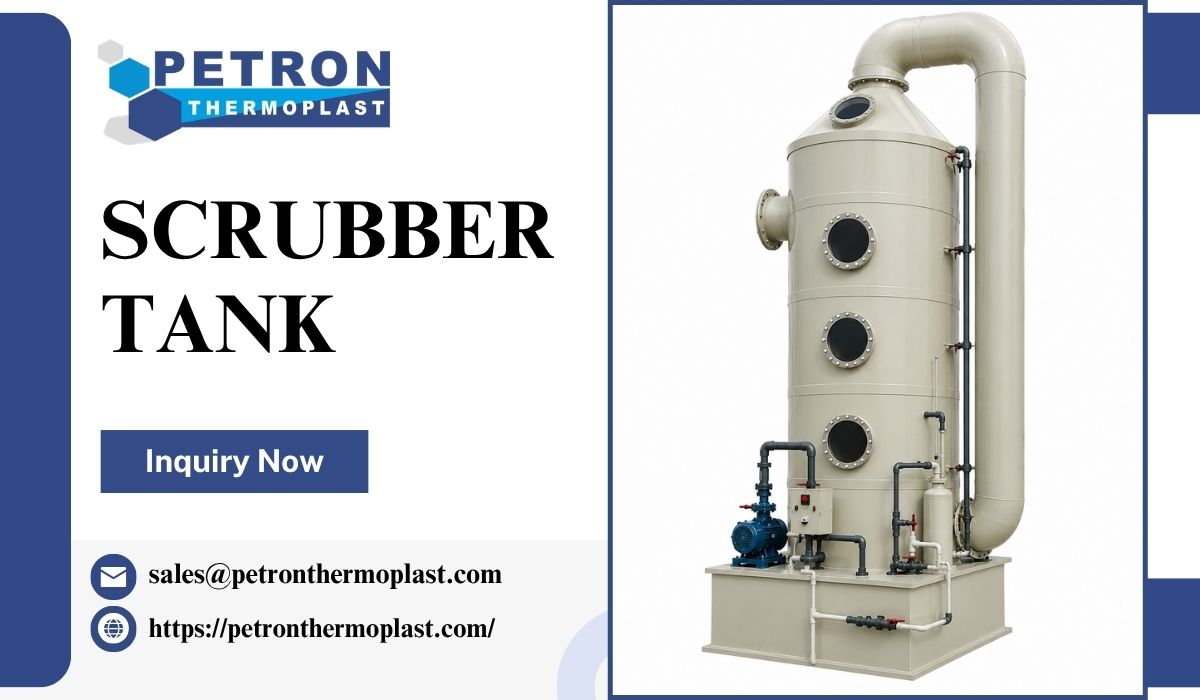
A Scrubber Tank for Acidic Gas and Fume Scrubbing is an important component in industrial air pollution control systems designed to treat corrosive gases, chemical fumes, and contaminated exhaust streams. Industries involved in chemical processing, metal finishing, pharmaceuticals, fertilizers, electroplating, wastewater treatment, and other manufacturing operations may generate acidic gases and fumes during production.
These emissions can be harmful to equipment, workers, and the surrounding environment if they are not properly controlled. An appropriately designed scrubber system helps remove or neutralize targeted pollutants before the treated gas is released through the exhaust system.
A scrubber tank forms part of the overall gas scrubbing arrangement and may be manufactured using corrosion-resistant materials such as PP, PPH, PVC, CPVC, FRP, or composite constructions, depending on the chemical characteristics and operating conditions. The correct material selection is essential because acidic gases and fumes can be highly corrosive.
What Is a Scrubber Tank?
A scrubber tank is a process vessel used within a gas cleaning system to facilitate the contact between contaminated gas and a suitable scrubbing liquid. The objective is to transfer selected pollutants from the gas phase into the liquid phase, where they can be neutralized, absorbed, or otherwise treated.
A typical wet scrubbing system may include:
- Scrubber tank or vessel
- Gas inlet
- Gas outlet
- Scrubbing liquid circulation system
- Spray nozzles
- Pump
- Packing or contact media, depending on design
- Mist eliminator
- Chemical dosing system
- Recirculation piping
- Valves and fittings
- Instrumentation
- Drain and overflow connections
Why Acidic Gas and Fume Scrubbing Is Important?
Industrial processes can generate acidic gases such as hydrogen chloride, sulfur dioxide, sulfuric acid mist, and other corrosive compounds. The exact contaminants depend on the process and raw materials used.
Uncontrolled acidic emissions can contribute to:
- Corrosion of plant equipment
- Deterioration of ventilation systems
- Unpleasant or hazardous workplace conditions
- Environmental emissions
- Damage to downstream equipment
- Increased maintenance requirements
How a Scrubber System Works
In a typical wet scrubbing process, contaminated gas enters the scrubber vessel through the gas inlet. The gas then comes into contact with a circulating scrubbing liquid.
Depending on the scrubber configuration, this contact may occur through:
- Spray systems
- Packed beds
- Tray systems
- Venturi sections
- Other gas-liquid contact arrangements
Material Selection for Scrubber Tanks
Material selection is one of the most critical aspects of scrubber tank design. Acidic gases, fumes, and scrubbing liquids can create highly corrosive operating environments.
Common materials used for industrial scrubber systems include:
PP and PPH
Polypropylene and polypropylene homopolymer are widely considered for corrosive gas scrubbing applications. They offer resistance to many chemical environments and are suitable for various industrial applications when properly specified.
FRP
Fiber-reinforced plastic can provide structural strength combined with corrosion resistance. FRP scrubber systems are commonly considered for larger industrial installations and demanding chemical environments.
PP-FRP Composite
A PP-FRP construction can combine a chemically resistant thermoplastic inner layer with a structurally strong FRP outer body. This configuration may be selected for specific industrial applications requiring both chemical resistance and mechanical strength.
PVC and CPVC
PVC and CPVC may be suitable for selected applications depending on the chemical environment and operating temperature.
The final material should always be selected according to the actual chemical composition, concentration, temperature, and operating conditions.
Applications of Scrubber Tanks
Scrubber tanks are used across numerous industries where acidic gases and chemical fumes are generated.
Chemical Processing Plants
Chemical manufacturing operations may generate corrosive gases and fumes during production, mixing, storage, and transfer processes. Scrubber systems can help control these emissions.
Metal Finishing and Pickling
Pickling and surface treatment processes can generate acidic fumes. Scrubber systems may be installed to treat exhaust air from process tanks and treatment areas.
Electroplating Industries
Electroplating facilities may generate chemical fumes during surface treatment and plating operations. Properly designed scrubbers can be integrated into exhaust systems.
Fertilizer Manufacturing
Fertilizer production can involve various chemical gases and vapors. Scrubber systems may be used to control process emissions depending on the specific manufacturing process.
Wastewater Treatment
Industrial wastewater treatment plants may generate odors and chemical gases. Scrubber systems can be used in selected applications to treat contaminated air streams.
Pharmaceutical Manufacturing
Pharmaceutical processes may involve chemical vapors and fumes that require controlled exhaust treatment. Scrubber systems can be designed around the specific process contaminants.
Acidic Gas Scrubbing Process
Acidic gas scrubbing generally involves transferring acid-forming gases from the contaminated gas stream into a liquid phase. In many applications, an alkaline scrubbing solution is used to neutralize acidic components.
The process may involve:
- Contaminated gas entering the scrubber.
- Scrubbing liquid being introduced into the contact zone.
- Gas and liquid coming into contact.
- Acidic compounds being absorbed into the liquid.
- Chemical neutralization occurring where applicable.
- Mist removal from the treated gas.
- Treated gas exiting the scrubber.
- Scrubbing liquid being recirculated or treated.
Importance of Scrubber Tank Design
A scrubber tank should be designed to meet the requirements of the complete gas treatment system.
Important design considerations include:
- Gas flow rate
- Gas temperature
- Pollutant concentration
- Chemical composition
- Scrubbing liquid type
- Required removal efficiency
- Pressure drop
- Tank dimensions
- Gas inlet and outlet arrangement
- Spray nozzle configuration
- Packing media requirements
- Mist eliminator design
- Drain and overflow connections
Scrubber Tank Components
A complete scrubber system may require several specialized components.
Spray Nozzles
Spray nozzles distribute the scrubbing liquid and improve gas-liquid contact.
Packing Media
Packed scrubbers use specially designed media to increase the surface area available for gas-liquid interaction.
Mist Eliminator
The mist eliminator helps reduce the carryover of liquid droplets with the treated gas stream.
Circulation Pump
A circulation pump moves the scrubbing liquid through the system.
Chemical Dosing System
Chemical dosing may be used to maintain the required scrubbing solution chemistry.
Level Control
Level monitoring helps maintain the appropriate liquid level within the system.
Valves and Piping
The piping and valves must be compatible with the scrubbing liquid and process conditions.
Corrosion Resistance
Corrosion resistance is a major advantage of using thermoplastic and FRP materials in scrubber applications. Acidic gases and chemically treated scrubbing liquids can cause rapid degradation of unsuitable materials.
A corrosion-resistant scrubber construction can help reduce:
- Leakage risks
- Material degradation
- Unplanned maintenance
- Replacement frequency
- Corrosion-related downtime
Maintenance of Scrubber Tanks
Regular maintenance is essential for maintaining scrubber performance.
Typical inspection activities may include:
- Checking the tank for visible damage
- Inspecting gas inlet and outlet connections
- Checking spray nozzles
- Inspecting packing media
- Cleaning the mist eliminator
- Checking circulation pumps
- Inspecting valves and piping
- Monitoring liquid levels
- Checking chemical dosing equipment
- Inspecting for leakage
Benefits of a Properly Designed Scrubber Tank
A properly engineered scrubber tank can provide several operational benefits:
- Corrosion-resistant construction
- Effective treatment of compatible acidic gases
- Reduced chemical fume emissions
- Protection of downstream equipment
- Improved process exhaust management
- Customizable configuration
- Integration with automated controls
- Reduced corrosion-related maintenance
- Compatibility with industrial ventilation systems
Scrubber Tank for Acidic Gas and Fume Scrubbing
A Scrubber Tank for Acidic Gas and Fume Scrubbing is an essential component of industrial gas treatment systems designed to manage corrosive gases and chemical fumes. By facilitating controlled contact between contaminated gas and a suitable scrubbing liquid, the system can help remove or neutralize targeted pollutants before the treated gas is discharged.
Materials such as PP, PPH, FRP, PP-FRP, PVC, and CPVC may be considered depending on the chemical environment, temperature, gas composition, and structural requirements. The complete system should be engineered with appropriate gas flow capacity, chemical compatibility, spray arrangements, packing media, mist elimination, and liquid circulation.
For industrial applications, Petron Thermoplast provides thermoplastic and composite solutions for chemical handling and process applications, including customized scrubber tank systems. Properly designed scrubber equipment can support industrial air pollution control objectives while helping protect plant infrastructure from corrosive gases and fumes.
When planning a new installation or upgrading an existing gas treatment system, the scrubber tank should be selected as part of a complete process solution. Detailed evaluation of gas composition, flow rate, temperature, chemical concentration, required treatment performance, and applicable environmental requirements is essential for developing a reliable and effective acidic gas and fume scrubbing system.