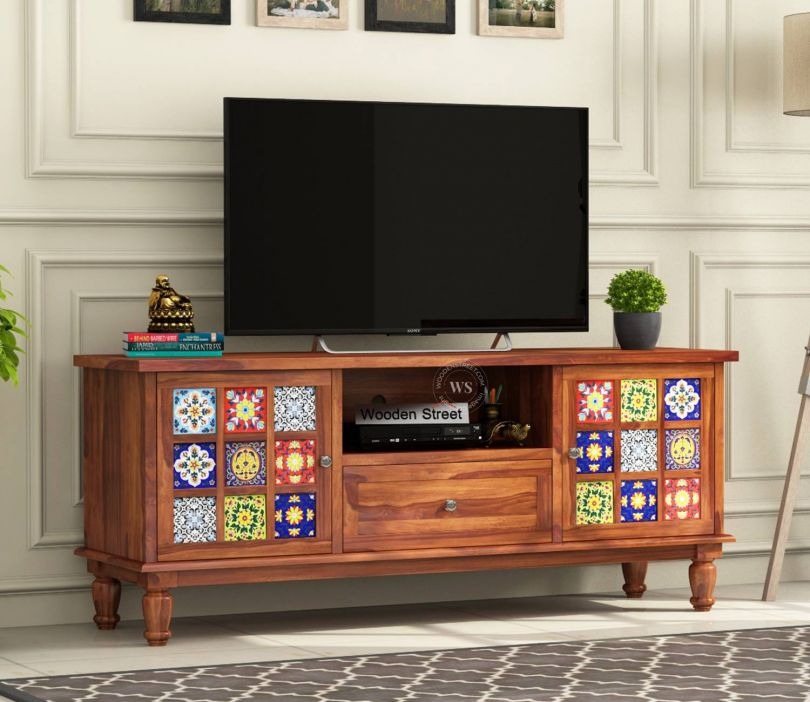
Choosing the ideal TV unit for your living room isn’t just about aesthetics it’s about marrying style with functionality. Whether you’re considering a sleek TV cabinet, a minimalist TV stand, or a warm wooden TV unit, understanding your room’s dimensions and layout is key. Here’s how to make a smart, stress-free decision.
1. Start with Accurate Room Measurements
To find the right TV unit, begin by measuring:
- Available wall or floor space — Note width (horizontal), depth (front-to-back), and height circumference.
- TV dimensions — The TV’s width and screen size determine how much surrounding space you need allow at least 5 inches on either side for clearance and air circulation.
- Viewing distance — Rule of thumb: for every 1 inch of TV screen diagonal, allow about 1–1.5 feet of viewing distance. Ensure your TV unit’s placement supports proper sightlines.
These measurements guide you toward TV stand or cabinets that fit proportionally within your living room.
2. Choose the Right Style for Your Layout
A. Wall Width and Proportion
- Wide walls: Opt for longer TV units e.g. 60–80 inches for balance.
- Narrow walls or corners: L-shaped or corner TV cabinets maximize space without overwhelming.
B. Room Flow and Placement
- Centered alignment: Placing the TV unit on a prominent wall enhances the room’s symmetry.
- Floating configurations: A wall-mounted TV unit can free floor space and create a modern, airy feel.
- Under a window or next to furniture: Ensure at least 2–3 inches of clearance on both sides for heat, ventilation, and cable access.
C. Layout Considerations
- In narrow rooms, consider a slim-depth TV unit (12–16 inches) to maintain walkways.
- In open-floor or L-shaped living rooms, choose a unit that can double as a visual anchor or room divider.
3. Material Matters: Wooden TV Unit vs. Other Options
A. Warmth & Durability of Wood
- Wooden TV units bring character and durability; they pair well with both traditional and contemporary interiors.
- Choose solid hardwood for longevity, or engineered wood/MDF with veneer for budget-friendly options.
B. Style Variations
- Rustic or farmhouse living rooms: Reclaimed or distressed wooden TV cabinets add texture and charm.
- Scandinavian styles: Lighter-toned wood with clean lines conveys freshness and simplicity.
- Modern lofts: A sleek TV stand with black-finished wood or open shelving uplifts the aesthetic.
C. Maintenance & Build Quality
- Water-resistant finishes help prevent warping.
- Sturdy construction ensures the heavy TV remains secure. Look for metal mounting plates or reinforced units if your TV exceeds 55 inches.
4. Storage & Cable Management
A TV unit’s real value lies in how it organizes:
- Enclosed cabinets and drawers hide clutter cables, remotes, consoles helping maintain a clean living room.
- Open shelves are great for decor and media devices but require additional effort to manage cable visibility.
- Built-in cable ports or holes keep wiring hidden and organized.
- Ventilation slots prevent overheating of electronics. Ensure sufficient airflow around routers, gaming consoles, and set-top boxes.
5. Compatibility with TV Sizes & Weight
Before finalizing:
- Check weight capacity—ensure your chosen TV stand or cabinet supports the TV’s weight and any extra gear.
- Assess surface area—larger TVs may overhang; units should accommodate them without looking unstable.
- For wall-mounted TVs, the shelf below should be at least as wide as the bracket, so devices and remotes can rest securely.
6. Enhancing Visual Balance
The right TV unit helps visually anchor the space:
- Match horizontal lines: Align the top edge of the unit with adjacent windows, sofas, or shelving for coherence.
- Layering: Add décor elements—books, vases, minimal art—around your unit for style without clutter.
- Contrast and color: A dark wood TV cabinet works as a focal point in a light-toned room. Conversely, a light-colored wooden TV unit against a dark accent wall creates stylish contrast.
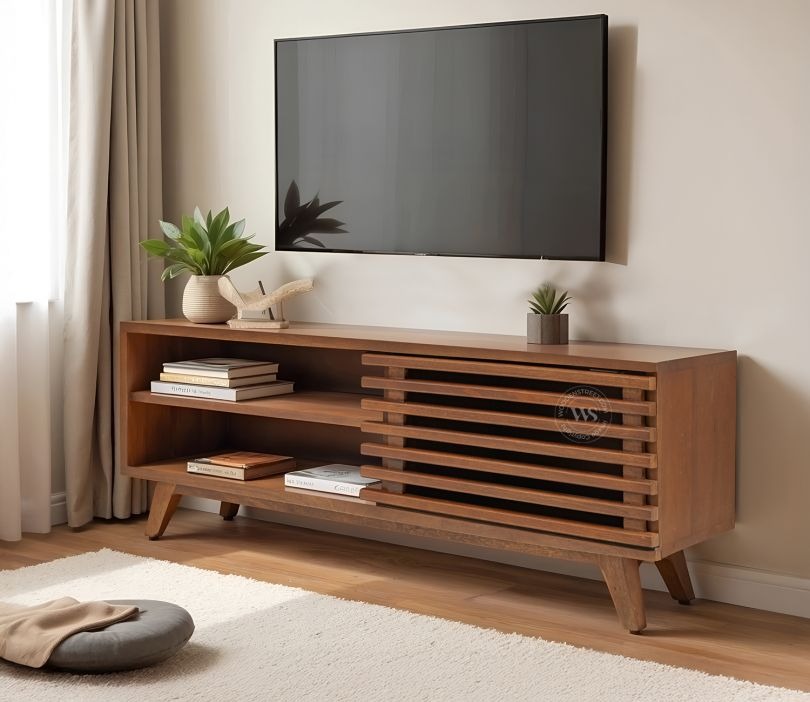
7. Budgeting Tips Without Sacrificing Quality
- Solid wood units cost more but offer longevity.
- Mid-range MDF or plywood options with high-quality veneers balance cost and look.
- Modular TV stands let you start simple and upgrade later with add-ons like storage towers.
- Watch for sales or Showroom floor models, and calculate if flat-pack options offer decent build quality for DIY setups.
8. Pro Tips for Easy Integration
- Test swatches—Get color or finish samples to see how lighting affects the wood tone in your space.
- Measure in person—Bring a tape measure to stores to visualize unit fit in your home layout.
- Flat surfaces nearby—Ensure there’s room for remotes, charging stations, or small lamps adjacent to the TV unit.
- Future upgrades—Pick a unit slightly wider than currently needed if you anticipate buying a bigger TV later.
Summary Table
| Consideration | Quick Action |
|---|---|
| Room & TV Dimensions | Measure available space and TV; ensure proper fit |
| Style & Material | Choose according to décor—wood for warmth, modern for sleekness |
| Storage & Cable Management | Opt for cabinets/holes to hide wires and devices |
| Weight & Stability | Verify the unit supports TV size and weight |
| Visual Harmony | Align with room lines and incorporate décor balance |
| Budget & Flexibility | Balance cost with quality; consider modular options |
| Future-proofing | Choose a unit that accommodates larger TVs or more storage later |
Final Thoughts
Choosing the perfect TV unit for your living room ultimately comes down to thoughtful measurement, functional storage, and aesthetic harmony. Whether you go for a durable wooden TV unit, a minimalistic TV stand, or a sleek TV cabinet, the ideal piece balances proportion, style, and practicality. Keep these insights top-of-mind and you’ll create a living space that’s both media-ready and beautifully composed.