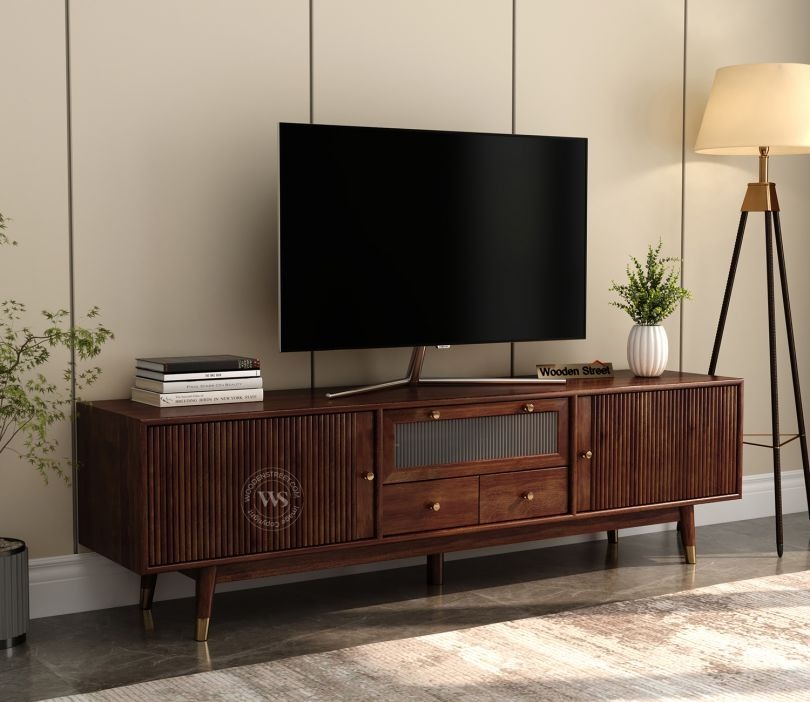
Choosing the right TV unit, TV cabinet, or TV stand goes beyond just looks. How you live, your space, budget, and habits all matter. Whether you’re considering a sleek wooden TV unit or a more traditional floor‑standing option, this guide will help you decide what fits your living room best.
1. What are Wall‑Mounted and Floor TV Units?
- Wall‑Mounted TV Unit: A setup where the TV (with or without a cabinet/ shelf beneath) is fixed/attached to the wall. The supporting furniture may be a floating shelf or minimal cabinetry. This style often aims for cleaner lines and “floating” visual appeal.
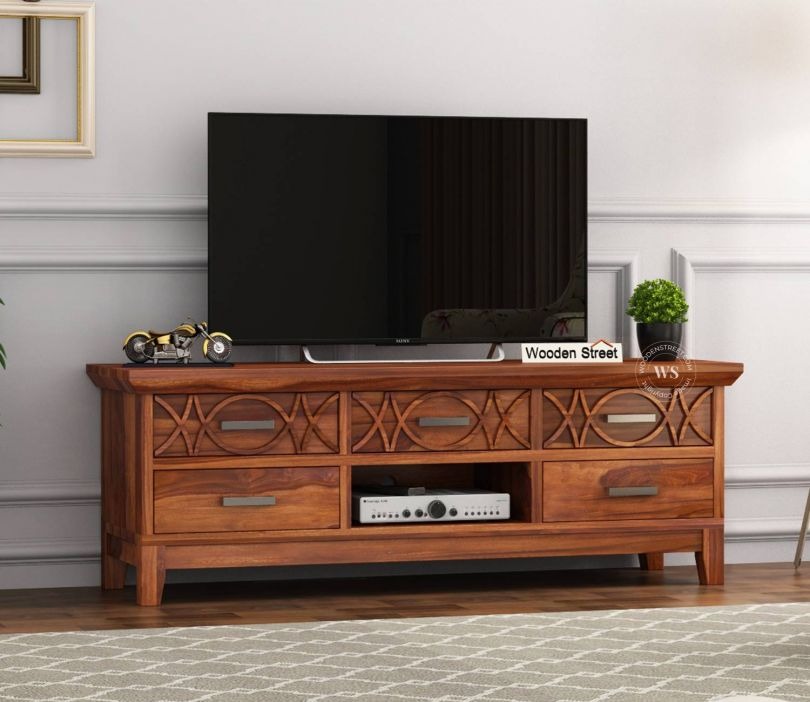
- Floor TV Unit (also called TV stand or free‑standing TV cabinet): A furniture piece placed on the floor, supporting the TV. It often offers shelves, drawers, or cabinets for storage of devices, media, remotes, decor etc.
Both types can come in many styles, designs, and materials. A wooden TV unit is a subset/style, possible in both wall‑mounted and floor versions.
2. Key Factors to Consider Before Deciding
Before you choose, think about:
- Room size and layout: How much floor space do you have? Will the placement of the seating make viewing comfortable?
- Viewing height and comfort: Eye level matters. Strain on neck or eyes if the TV is too high or too low.
- Mobility and flexibility: Do you move furniture/layout frequently? Do you plan to move houses/rooms?
- Storage needs: Media players, gaming consoles, DVDs/books, remotes, decorative items.
- Aesthetic style: Minimalist, traditional, rustic, modern etc.
- Budget & installation cost: Wall‑mounting may need hardware + professional help, whereas floor units can be simpler to set up.
- Safety: Kids, pets, accidental knocks.
- Cable management: Hiding wires vs visible cords.
3. Advantages & Disadvantages of Wall‑Mounted TV Units
Advantages
- Saves Floor Space: Frees up floor area, making the room feel more open.
- Modern, Clean Aesthetic: Provides sleek design lines with minimal visual clutter.
- Better Safety: Less risk of tipping or getting bumped by children or pets.
- Flexible Viewing Angles / Height Options: Depending on the mount type, you can adjust for optimal viewing and comfort.
Disadvantages
- Installation Complexity & Cost: Requires drilling, proper mounting hardware, sometimes professional installation.
- Reduced Storage Capacity: Floating or wall units often lack deep cabinets or large drawers.
- Less Flexibility in Rearrangement: Once installed, it’s not simple to move.
- Cable Management & Wall Damage Issues: Wires may need to be hidden in-wall or via clever routing; drilling can damage walls.
4. Advantages & Disadvantages of Floor TV Units (TV Stand / TV Cabinet)
Advantages
- Generous Storage: Plenty of shelves, drawers, and cabinets to hold devices, media, décor, and power strips.
- Easier Setup & Flexibility: No structural modifications required. You can move it or replace it easily.
- Variety of Styles and Materials: From wooden TV units with a classic look to contemporary designs.
- Accessible Ports & Maintenance: Rear of devices is more easily accessible for upgrades or cleaning.
Disadvantages
- Occupies Floor Space: Can make a room feel more crowded, especially in small spaces.
- Visual Bulk: Depending on design, may look heavy or less minimalist.
- Tip‑Over Risk if Not Stable: Especially with big TVs or active children/pets.
- Cable Clutter: Without built-in cable management, cords can be visible and messy.
5. Comparing with Wooden TV Units
A wooden TV unit is often a floor-standing cabinet or stand made of wood. Wooden finishes can also be applied to wall-mounted units.
- Warmth and Natural Feel: Wood adds warmth and texture; natural grains give visual interest.
- Style Versatility: Rustic, mid-century modern, Scandinavian, colonial – wooden units suit many décor styles.
- Durability: Good quality wood lasts long and can be repaired or refinished.
- Weight & Bulk: Wooden furniture is heavier and harder to move.
- Cost Variations: Solid wood costs more; engineered wood or veneer is more affordable.
6. Matching to Lifestyle / Living Room Scenarios
| Scenario | What Matters Most | Better Choice |
|---|---|---|
| Small apartment / studio | Maximize floor space; minimal clutter | Wall-mounted unit or floating shelf with small cabinet |
| Frequent relocation / rented flat | Avoid permanent installation; flexible layout | Floor TV unit / TV stand, preferably modular |
| Lots of gadgets & media | Storage and easy access | Floor TV cabinet / TV stand, preferably wooden with shelves |
| Modern, minimalist style | Clean lines; minimal elements | Wall-mounted unit, floating panel behind TV optional |
| Safety concerns (kids/pets) | Reduce tip-over & reach | Wall-mounted unit or sturdy anchored floor unit |
| Frequent décor/layout changes | Easy to move furniture | Floor TV stand or modular wooden cabinet |
7. Practical Tips for Measurement, Safety, and Style
- Measure seating distance & height: Center of TV screen should align with eye level.
- Weight and wall strength: Ensure wall can support the TV and mount.
- Cable management: Plan in-wall conduit, cable channels, or behind furniture.
- Ventilation: Ensure electronics do not overheat inside enclosed cabinets.
- Material & finish: Choose wood that resists moisture, fading, and wear.
- Proportion & scale: The unit should be proportionate to TV size and wall.
- Accessibility: Ensure access to ports and cables for maintenance.
8. Final Verdict: What Suits You Best?
- Wall-Mounted Units: Ideal for small spaces, modern aesthetic, safety, and minimal clutter.
- Floor TV Units / Cabinets: Better for storage, flexibility, accessibility, and a cozy traditional style.
- Hybrid Option: Wall-mount TV with a low floor cabinet beneath combines storage with a clean look.
The best choice depends on your lifestyle, space, and design preferences.
Summary
- Wall-mounted units save space, offer modern design, and are safer but less flexible and offer limited storage.
- Floor TV units provide storage, ease of movement, and a classic look but occupy floor space and can appear bulky.
Choose based on your priorities for functionality, aesthetics, and lifestyle.