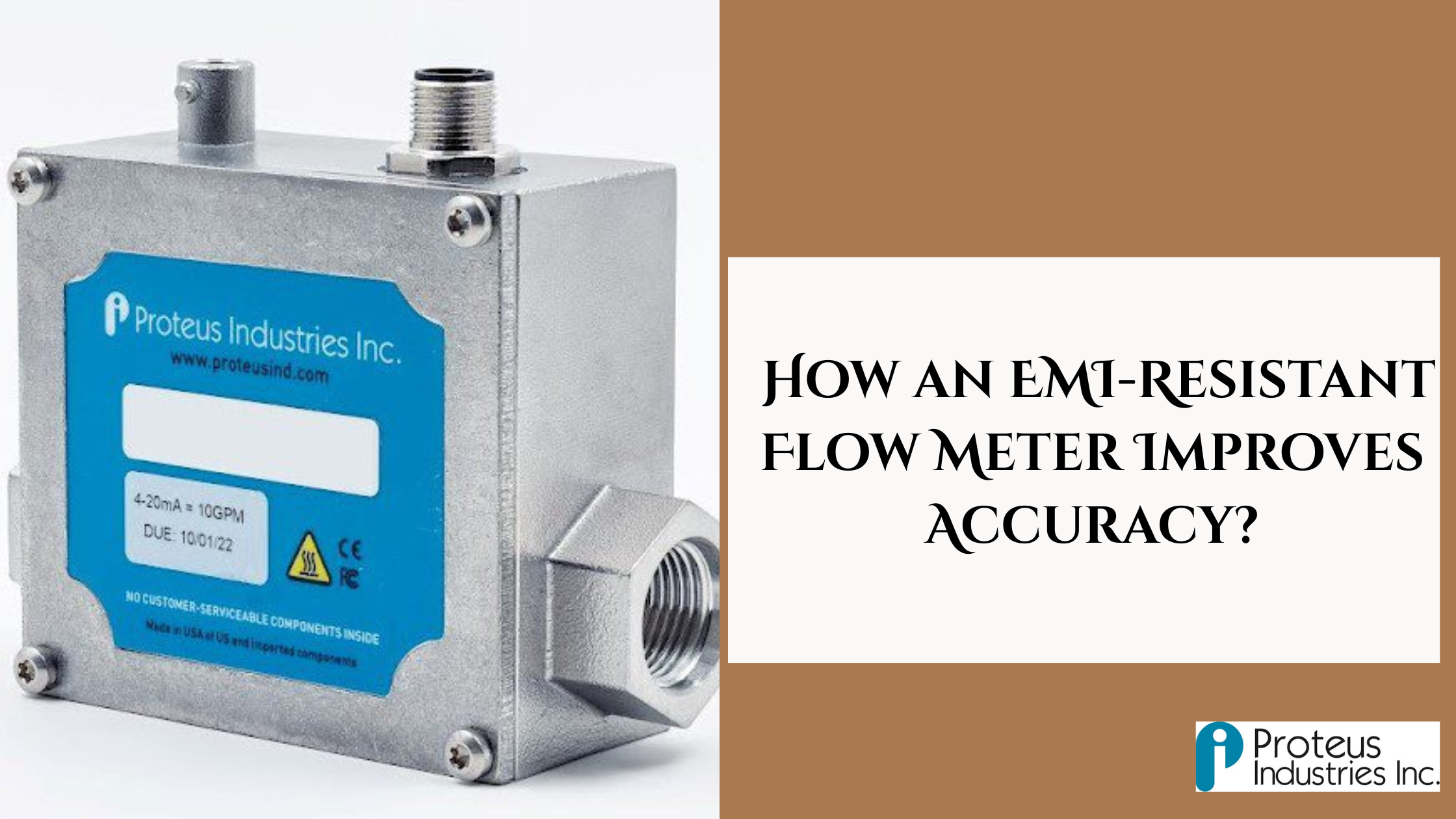
In industrial environments where precision measurement is critical, electromagnetic interference (EMI) and radio-frequency interference (RFI) pose significant challenges to flow measurement accuracy. An emi resistant flow meter is specifically engineered to maintain reliable performance in harsh conditions where conventional flow meters struggle or fail completely. These specialised instruments provide consistent, accurate measurements even in the presence of high levels of electromagnetic noise from nearby equipment, power supplies, and industrial machinery. As industries increasingly rely on automated processes and precision control systems, the demand for flow meters that can withstand electromagnetic disturbances while delivering accurate data has become essential for operational efficiency and safety.
Understanding Electromagnetic Interference in Industrial Environments
Electromagnetic interference occurs when electromagnetic fields generated by electrical equipment disrupt the normal operation of nearby electronic devices. In industrial settings, sources of EMI are abundant and include variable frequency drives, welding equipment, motors, RF power supplies, radio transmitters, and high-power electrical systems. These electromagnetic fields can induce unwanted voltages in the sensitive electronics and signal cables of flow measurement systems, leading to erroneous readings, signal degradation, or complete system failure.
Traditional flow meters often lack adequate shielding and filtering to protect their internal circuitry from these electromagnetic disturbances. When exposed to EMI, conventional meters may display fluctuating readings, drift from calibrated values, or produce intermittent signal outputs, compromising process control and data integrity. This vulnerability becomes particularly problematic in industries such as semiconductor manufacturing, aerospace, automotive production, and pharmaceutical processing, where precise flow control directly impacts product quality and regulatory compliance.
The Engineering Behind EMI-Resistant Flow Meters
EMI-resistant flow meters incorporate advanced design features and protective technologies to maintain measurement accuracy in electromagnetically noisy environments. These specialised instruments employ multiple layers of defence against interference, combining superior shielding, robust electronic components, and sophisticated signal processing algorithms.
The physical construction of EMI-resistant flow meters typically includes stainless steel housings and faceplates that provide effective electromagnetic shielding while also offering durability and corrosion resistance. This metallic enclosure acts as a Faraday cage, deflecting external electromagnetic fields away from the sensitive internal electronics. Additionally, the use of shielded cables, filtered power supplies, and grounded connections further reduces the pathways for interference to enter the measurement system.
At the electronic level, these flow meters utilise advanced filtering techniques and digital signal processing to distinguish legitimate flow signals from electromagnetic noise. Modern EMI-resistant designs incorporate specialised integrated circuits with enhanced immunity to voltage transients and electromagnetic fields. The circuitry is carefully laid out to minimise coupling between components and to provide adequate separation between high-power and low-power signal paths.
Meeting Industry Standards for EMI Immunity
Compliance with international electromagnetic compatibility standards demonstrates a flow meter’s ability to perform reliably in challenging environments. The IEC 61000-4-3 standard specifically addresses immunity to radiated electromagnetic fields and establishes testing protocols to verify equipment performance under controlled electromagnetic exposure.
Flow meters designed for EMI-resistant applications undergo rigorous laboratory testing to validate their immunity levels. Advanced EMI-resistant flow meters can withstand RF power levels of 10 V/m up to frequencies of 10 GHz, with some robust designs capable of operating in fields up to 1181 GHz. This extensive frequency range coverage ensures protection against interference from various sources, including modern wireless communication systems, industrial radio equipment, and high-frequency switching power supplies.
Meeting these stringent standards requires comprehensive testing procedures in which flow meters are subjected to electromagnetic fields of varying frequencies and intensities, with their performance continuously monitored. Only devices that maintain their specified accuracy throughout these tests can claim true EMI resistance and provide users with confidence in their reliability.
How EMI Resistance Directly Improves Measurement Accuracy?
The primary benefit of EMI-resistant design is the preservation of measurement accuracy under real-world operating conditions. When electromagnetic interference affects a conventional flow meter, the induced noise appears as unwanted signals that combine with the legitimate flow measurement signal. This contamination manifests as reading fluctuations, offset errors, or increased measurement uncertainty.
EMI-resistant flow meters eliminate these accuracy degradations by preventing interference from reaching the measurement circuitry. By maintaining signal integrity throughout the measurement chain, these instruments deliver consistent, repeatable readings that accurately reflect actual flow conditions rather than electromagnetic artefacts. This reliability enables tighter process control tolerances, reduces waste, and improves product quality consistency.
The enhanced accuracy also extends to the flow meter’s output signals. With effective EMI protection, the analogue voltage or current outputs remain stable and proportional to the measured flow rate, ensuring that downstream control systems and data acquisition equipment receive clean, accurate information for decision-making and process adjustments.
Digital Signal Processing and Enhanced Stability
Modern EMI-resistant flow meters incorporate digital signal processing techniques that further enhance measurement accuracy and stability. Digital processing enables sophisticated filtering algorithms that distinguish genuine flow signals from electromagnetic noise based on frequency characteristics and signal patterns.
These digital systems sample the flow signal at high rates and apply mathematical filtering to remove noise components while preserving the true flow information. Advanced algorithms can adapt to changing interference patterns, providing consistent performance even when the electromagnetic environment varies throughout the day or across different operating conditions.
Digital processing also enables features such as temperature compensation, nonlinearity correction, and viscosity adjustment, improving overall measurement accuracy. By processing signals in the digital domain, these flow meters achieve stability and precision that would be difficult or impossible to attain with analogue circuitry alone.
Practical Applications and Environmental Considerations
EMI-resistant flow meters find critical applications in environments where both accuracy and reliability are non-negotiable. Semiconductor fabrication facilities that use RF plasma systems and numerous electromagnetic field sources depend on these specialised flow meters for precise coolant and chemical delivery. In these applications, even minor measurement errors can result in defective wafers and significant financial losses.
The aerospace and automotive industries employ EMI-resistant flow meters in testing facilities where high-power electrical equipment operates in proximity to measurement systems. Medical device manufacturing and pharmaceutical production facilities utilise these meters to ensure accurate dosing and mixing of critical fluids, where measurement errors could compromise patient safety or product efficacy.
The robust construction of EMI-resistant flow meters typically includes NEMA 4X or IP66-rated enclosures that protect against moisture, dust, and environmental contaminants, as well as electromagnetic interference. This dual protection makes them suitable for outdoor installations, wash-down environments, and harsh industrial conditions where conventional meters would quickly degrade or fail.
Temperature Range and Material Compatibility
Beyond EMI resistance, these specialised flow meters often feature extended temperature capabilities and broad fluid compatibility. Advanced designs can monitor liquids over a temperature range from -40°C to 90°C at ambient temperatures up to 30°C, accommodating both cryogenic and elevated-temperature applications.
Material selection is crucial for ensuring compatibility with various process fluids. Stainless steel construction provides excellent corrosion resistance for aqueous solutions, coolants, and many chemical applications. The use of compatible wetted materials ensures long-term reliability and prevents measurement drift caused by corrosion or chemical attack.
Many EMI-resistant flow meters are compatible with advanced heat-transfer fluids, synthetic coolants, and specialised industrial liquids used in demanding applications. Custom calibration options account for viscosity effects and temperature-dependent fluid properties, enabling accurate measurements across diverse applications and operating conditions.
Output Flexibility and Integration Capabilities
EMI-resistant flow meters typically offer multiple output options to facilitate integration with various control systems and data-acquisition platforms. Standard analogue outputs, such as 0-10 VDC, 0-5 VDC, and 4-20 mA, enable compatibility with PLCs, SCADA systems, and industrial controllers.
The inclusion of on-board relays for redundant interlocks adds a layer of safety and control capability. These user-specified, factory-programmed trip points enable automated responses to flow conditions, supporting fail-safe operations and process protection without requiring external logic controllers.
Some designs incorporate provisions for temperature measurement through dry wells that accommodate bayonet-type thermocouples. This integration allows simultaneous monitoring of flow and temperature from a single instrument, reducing installation complexity and providing correlated data for thermal management applications.
Conclusion
EMI-resistant flow meters represent a critical advancement in industrial measurement technology, addressing the fundamental challenge of maintaining accuracy in electromagnetically hostile environments. Through sophisticated shielding, advanced electronics, digital signal processing, and compliance with rigorous international standards, these specialised instruments deliver reliable performance where conventional meters fail. The ability to provide consistent, accurate measurements despite high levels of electromagnetic interference directly translates to improved process control, enhanced product quality, reduced waste, and greater operational safety. As industrial environments become increasingly complex with more sources of electromagnetic interference, the importance of measurement technology will continue to grow, making these instruments essential for industries that demand precision and reliability in challenging conditions.