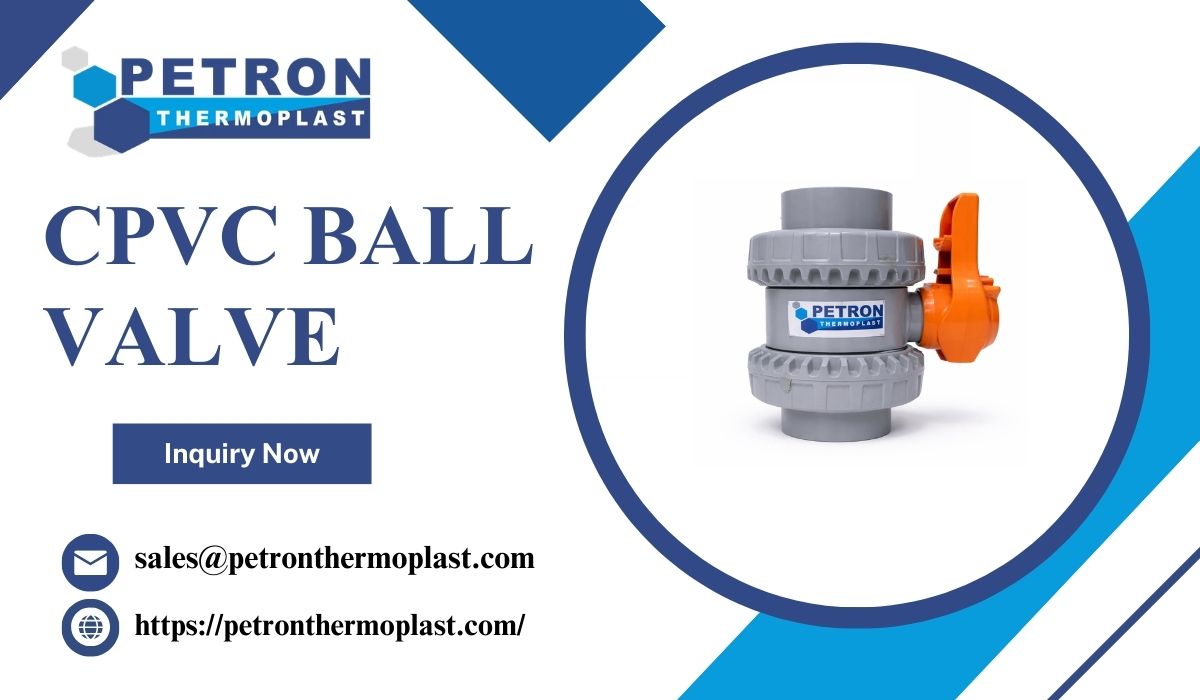
Industrial fluid control systems require components that offer durability, efficiency, and reliable performance under demanding conditions. Among the various valves used in industrial pipelines, CPVC ball valves have gained widespread popularity due to their excellent chemical resistance, high temperature tolerance, and long service life. A high efficiency CPVC ball valve is designed to provide smooth operation, leak-proof sealing, and optimal flow control in different industrial environments.
In industries where fluid management is critical, selecting the right valve can significantly impact system performance and maintenance costs. CPVC ball valves are specifically engineered to meet these requirements, making them an ideal choice for modern industrial piping systems.
Understanding CPVC Ball Valves
CPVC stands for Chlorinated Polyvinyl Chloride, a thermoplastic material known for its enhanced strength and temperature resistance compared to standard PVC. CPVC ball valves use a rotating ball with a central bore that allows or blocks the flow of fluid when the valve handle is turned.
The design is simple yet highly efficient. When the handle is aligned with the pipe, fluid flows freely through the valve. When rotated 90 degrees, the ball blocks the flow completely. This quick quarter-turn mechanism ensures fast and reliable operation, which is essential for industrial systems that require immediate control over fluid movement.
Importance of High Efficiency in Industrial Valves
Industrial systems often involve continuous fluid transfer, chemical processing, or high-pressure pipelines. In such environments, valve efficiency directly affects system productivity, safety, and operational costs.
A high efficiency CPVC ball valve ensures:
- Minimal pressure loss during operation
- Smooth and consistent fluid flow
- Reliable shut-off capability
- Reduced energy consumption
- Lower maintenance requirements
These benefits help industries maintain optimal production performance while minimizing downtime and repair expenses.
Key Features of High Efficiency CPVC Ball Valves
High efficiency CPVC ball valves are designed with advanced engineering features to meet demanding industrial requirements.
Superior Chemical Resistance
One of the most important advantages of CPVC material is its excellent resistance to corrosive chemicals. Industrial processes often involve acids, alkalis, and aggressive chemicals that can damage traditional metal valves.
CPVC ball valves can handle a wide range of chemicals without corrosion or degradation, making them ideal for chemical processing plants, laboratories, and industrial fluid handling systems.
High Temperature Tolerance
Compared to standard PVC, CPVC can withstand higher temperatures, typically up to 90°C (194°F) depending on operating conditions. This makes CPVC ball valves suitable for hot water systems, industrial heating applications, and chemical processing pipelines where elevated temperatures are common.
Smooth Flow Performance
High efficiency valves are designed with a smooth internal surface that minimizes friction and turbulence. This design ensures:
- Improved flow efficiency
- Reduced pressure drop
- Enhanced energy savings
Smooth flow also prevents buildup of residues inside the pipeline, maintaining consistent system performance.
Leak-Proof Sealing System
Industrial systems require valves that provide reliable sealing to prevent fluid leakage. CPVC ball valves are equipped with high-quality seals and seats that ensure tight shut-off performance.
The leak-proof design enhances safety and protects surrounding equipment from damage caused by chemical spills or fluid leakage.
Lightweight and Easy Installation
Compared to metal valves, CPVC ball valves are lightweight and easier to install. This reduces installation time and labor costs, especially in large industrial piping projects.
The lightweight structure also makes transportation and handling more convenient for contractors and maintenance teams.
Applications of CPVC Ball Valves in Industrial Systems
High efficiency CPVC ball valves are widely used in multiple industries where reliable fluid control is essential.
Chemical Processing Industry
Chemical manufacturing plants require piping components that can safely handle corrosive substances. CPVC ball valves offer excellent resistance to acids, alkalis, and chemical solutions, making them ideal for chemical transfer systems.
Water Treatment Plants
In water treatment facilities, valves must maintain consistent flow control while resisting corrosion caused by chemicals used in purification processes. CPVC ball valves provide reliable operation in filtration systems, chemical dosing lines, and water distribution pipelines.
Pharmaceutical Industry
Pharmaceutical production requires highly reliable piping systems with minimal contamination risk. CPVC valves help maintain controlled fluid flow while ensuring chemical compatibility and durability.
Industrial Manufacturing Units
Manufacturing facilities rely on efficient piping systems for cooling water, chemical supply, and process fluids. CPVC ball valves ensure dependable performance in these demanding environments.
Irrigation and Agricultural Systems
In large irrigation networks, durable valves are required to manage water flow across extensive pipelines. CPVC ball valves provide long-term reliability and resistance to environmental conditions.
Advantages Over Traditional Metal Valves
While metal valves have traditionally been used in industrial systems, CPVC ball valves offer several advantages that make them increasingly popular in modern applications.
Corrosion-Free Performance
Metal valves are prone to rust and corrosion when exposed to chemicals or moisture. CPVC ball valves eliminate this issue completely, ensuring long-term durability.
Lower Maintenance Costs
Due to their corrosion resistance and simple design, CPVC ball valves require less maintenance compared to metal alternatives. This reduces operational costs over the lifespan of the piping system.
Cost-Effective Solution
CPVC valves are generally more affordable than stainless steel or alloy metal valves, making them a cost-effective option for large-scale industrial projects.
Energy Efficient Operation
The smooth internal structure of CPVC valves minimizes friction and pressure loss, improving the overall energy efficiency of the fluid handling system.
Factors to Consider When Choosing CPVC Ball Valves
Selecting the right CPVC ball valve for an industrial system requires careful evaluation of several factors.
Pressure Rating
Industrial pipelines operate at different pressure levels. It is important to choose a valve that can handle the required pressure conditions without compromising safety.
Temperature Range
Ensure that the selected CPVC valve can withstand the maximum temperature expected in the system.
Valve Size
CPVC ball valves are available in multiple sizes to accommodate different pipeline diameters. Proper sizing ensures efficient flow and optimal system performance.
Quality of Manufacturing
High-quality manufacturing standards ensure that the valve provides reliable performance over a long service life. Industrial buyers should always choose valves produced by experienced manufacturers using premium materials.
Maintenance and Longevity
Although CPVC ball valves require minimal maintenance, periodic inspection is recommended to ensure long-term reliability.
Maintenance practices may include:
- Checking for external leaks
- Ensuring smooth handle operation
- Inspecting seals and fittings
- Cleaning any buildup in the pipeline
Proper maintenance helps maximize the lifespan of the valve and ensures uninterrupted industrial operations.
Future of CPVC Ball Valves in Industrial Systems
As industries continue to adopt advanced materials and efficient fluid control technologies, the demand for CPVC ball valves is steadily increasing. Their ability to combine chemical resistance, durability, and cost-effectiveness makes them a preferred choice for modern industrial infrastructure.
Manufacturers are also developing improved valve designs with enhanced sealing systems, better pressure ratings, and optimized flow performance. These advancements will further strengthen the role of CPVC ball valves in future industrial piping solutions.
Conclusion
A high efficiency CPVC ball valve plays a crucial role in ensuring reliable and safe fluid control within industrial systems. With benefits such as chemical resistance, high temperature tolerance, leak-proof performance, and energy-efficient operation, CPVC ball valves have become an essential component in modern industrial pipelines.
From chemical processing plants and water treatment facilities to manufacturing units and irrigation systems, these valves deliver dependable performance across a wide range of applications. By choosing high-quality CPVC ball valves from trusted manufacturers like Petron Thermoplast, industries can enhance operational efficiency, reduce maintenance costs, and ensure long-lasting piping system performance.
Investing in advanced CPVC valve technology is not only a practical choice but also a strategic step toward building durable and efficient industrial fluid management systems.