PVDF pipe and fittings are high-performance thermoplastic components engineered for demanding industrial environments where temperature resistance, chemical compatibility, and long-term reliability are critical. One of the most significant advantages of PVDF (Polyvinylidene fluoride) systems is their excellent thermal stability, enabling consistent performance in applications involving elevated temperatures and aggressive media.
Overview of PVDF Material
PVDF is a semi-crystalline fluoropolymer known for its superior resistance to heat, chemicals, and environmental degradation. It is widely used in industries such as chemical processing, pharmaceuticals, semiconductors, and water treatment.
Key Material Properties
- Density: 1.75 – 1.78 g/cm³
- Tensile Strength: 40 – 55 MPa
- Operating Temperature Range: -40°C to +140°C
- Melting Point: ~170°C
- Thermal Conductivity: ~0.19 W/m·K
- Low thermal expansion compared to other thermoplastics
- Excellent resistance to oxidation and UV radiation
These characteristics make PVDF pipe and fittings highly suitable for systems exposed to fluctuating or high temperatures.
Thermal Stability in PVDF Systems
Thermal stability refers to the ability of a material to maintain its physical and mechanical properties when exposed to elevated temperatures over time.
Key Aspects of Thermal Stability
- Resistance to softening and deformation
- Retention of mechanical strength at high temperatures
- Stability under thermal cycling conditions
- Resistance to thermal aging and degradation
PVDF maintains structural integrity and performance even under prolonged exposure to high temperatures, making it a reliable material for critical applications.
Design Features of PVDF Pipe and Fittings
High Temperature Resistance
PVDF systems can operate continuously at temperatures up to 140°C, significantly higher than many other thermoplastics.
Low Thermal Expansion
- Reduced dimensional changes under temperature variation
- Improved joint stability and alignment
Smooth Internal Surface
- Minimizes friction losses
- Prevents scaling and deposition
Strong Joint Integrity
- Compatible with fusion welding techniques
- Leak-proof joints even under thermal stress
Types of PVDF Pipe and Fittings
Pipes
- Extruded PVDF pipes with uniform wall thickness
- Available in various diameters and pressure ratings
Fittings
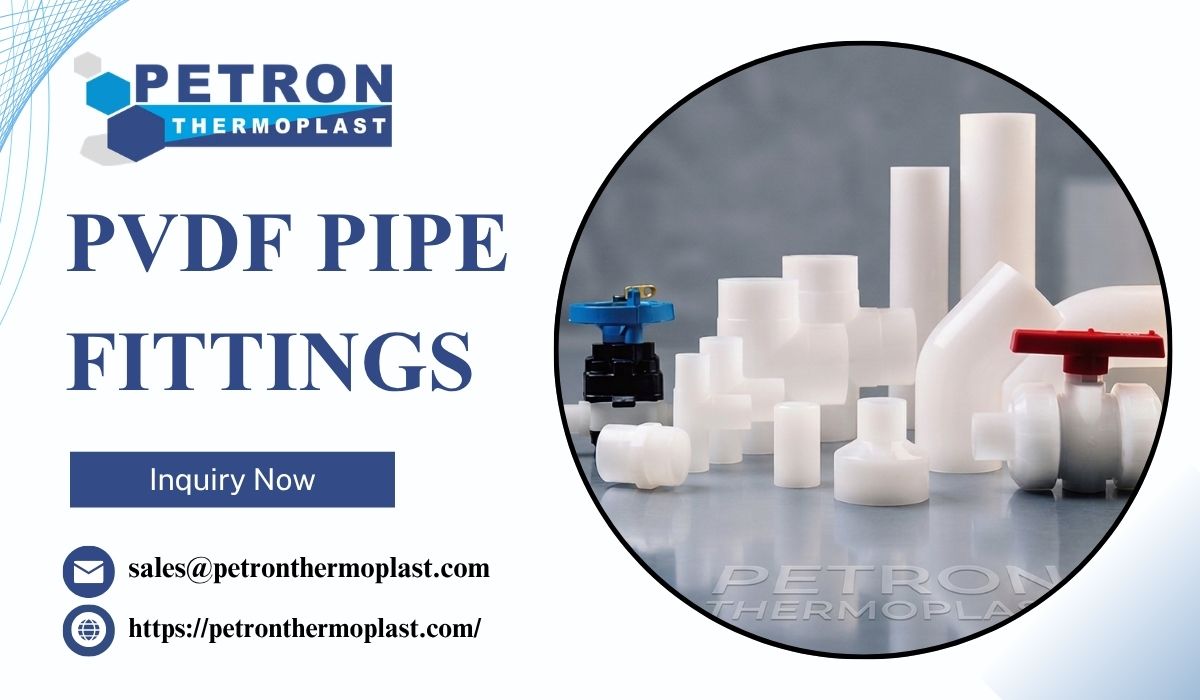
- Elbows, tees, reducers, couplings
- Flanges and valves for system integration
Valves
- Ball valves, diaphragm valves, and check valves
- Designed for precise flow control under high-temperature conditions
Manufacturing Process
PVDF pipe and fittings are manufactured using advanced extrusion and molding processes to ensure dimensional accuracy and consistent quality.
- Raw Material Selection
- High-purity PVDF resin
- Controlled additives for thermal and UV stability
- Extrusion (Pipes)
- Melt extrusion under controlled temperature
- Uniform wall thickness and smooth surface finish
- Injection Molding (Fittings)
- Precision molding for complex geometries
- Tight tolerances for accurate fit
- Quality Control
- Thermal resistance testing
- Pressure testing
- Dimensional inspection
Advantages of PVDF Pipe and Fittings
Excellent Thermal Stability
- Maintains performance at elevated temperatures
- Suitable for hot fluid transport
Chemical Resistance
- Resistant to strong acids, halogens, and oxidizing agents
- Suitable for aggressive chemical environments
High Purity
- Low contamination levels
- Ideal for pharmaceutical and semiconductor applications
Mechanical Strength
- High tensile and impact strength
- Resistance to stress and deformation
UV and Weather Resistance
- Suitable for outdoor installations
- Long-term resistance to environmental exposure
Industrial Applications
Chemical Processing Plants
Used for transporting hot corrosive chemicals and process fluids.
Pharmaceutical Industry
Ensures high purity and thermal stability in cleanroom environments.
Semiconductor Industry
Used in ultrapure water and chemical distribution systems.
Water Treatment Systems
Handles chemical dosing and high-temperature water processes.
Oil and Gas Industry
Suitable for handling aggressive fluids under thermal stress.
Comparison with Other Thermoplastics
| Parameter | PVDF Pipe & Fittings | PP / PVC Systems |
| Temperature Resistance | Up to 140°C | Lower |
| Thermal Stability | Excellent | Moderate |
| Chemical Resistance | Superior | Moderate |
| Mechanical Strength | High | Moderate |
| Cost | Higher | Lower |
Installation Guidelines
- Use appropriate welding techniques (butt fusion, socket fusion)
- Ensure proper alignment to avoid thermal stress
- Allow for thermal expansion using supports and guides
- Follow recommended temperature and pressure limits
Proper installation ensures optimal performance and longevity.
Maintenance and Lifecycle Performance
PVDF pipe and fittings require minimal maintenance due to their durability and resistance to degradation.
Maintenance Practices
- Periodic inspection of joints and fittings
- Cleaning to prevent contamination
- Monitoring for mechanical damage
Lifecycle Benefits
- Long service life
- Consistent performance under thermal stress
- Reduced downtime and maintenance costs
Quality Standards and Compliance
High-quality PVDF systems comply with international standards:
- ISO 9001: Quality Management System
- ASTM standards for PVDF materials
- DIN and EN standards for piping systems
Customization Options
Manufacturers provide tailored solutions for specific industrial needs:
- Custom pipe sizes and pressure ratings
- Specialized fittings and valves
- High-purity grades for critical applications
- Integration with automated systems
Sustainability and Environmental Benefits
- Long lifecycle reduces material replacement
- Recyclable thermoplastic material
- Reduced need for protective coatings
Conclusion
PVDF pipe and fittings with excellent thermal stability offer a high-performance solution for industrial applications involving elevated temperatures and aggressive chemical environments. Their ability to maintain structural integrity, mechanical strength, and chemical resistance under thermal stress makes them ideal for critical process systems.
With advanced manufacturing, strict quality control, and customization capabilities, PVDF piping systems by Petron Thermoplast deliver reliable performance, reduced maintenance, and long-term operational efficiency across industries such as chemical processing, pharmaceuticals, and semiconductor manufacturing.