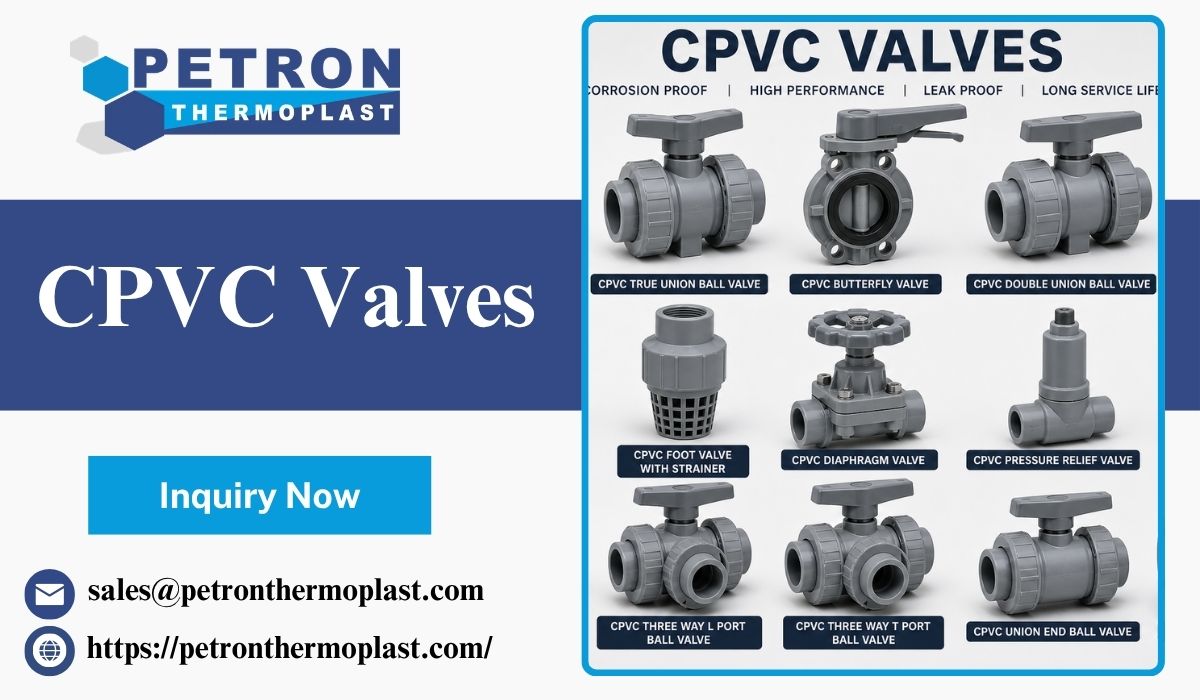
Chlorinated Polyvinyl Chloride (CPVC) valves are critical components in chemical processing systems where resistance to corrosion, high temperature stability, and long-term reliability are essential. Designed to handle aggressive chemicals and challenging operating conditions, corrosion proof CPVC valves provide efficient flow control, leak-free performance, and extended service life. These valves are widely used in chemical plants, water treatment facilities, pharmaceuticals, and industrial process systems.
In chemical processing units, the integrity of piping components directly impacts safety, productivity, and operational efficiency. CPVC valves are engineered to meet these demands, offering a cost-effective and durable alternative to traditional metal valves.
Overview of CPVC Material
CPVC is a thermoplastic material produced by chlorination of PVC resin, which enhances its temperature resistance and chemical stability. This makes CPVC highly suitable for handling hot and corrosive fluids.
Key Material Properties
- Density: 1.50 – 1.60 g/cm³
- Tensile Strength: 50 – 70 MPa
- Operating Temperature Range: Up to 90°C
- Excellent resistance to acids, alkalis, and salts
- Low thermal conductivity
- Non-corrosive and non-toxic
These properties make CPVC valves ideal for demanding chemical processing environments.
Importance of Corrosion Resistance in Chemical Processing
Chemical processing units involve the handling of highly reactive and corrosive substances such as:
- Sulfuric acid
- Hydrochloric acid
- Caustic soda
- Chlorinated compounds
Corrosion can lead to:
- Leakage and contamination
- Equipment failure
- Increased maintenance costs
- Safety hazards
Corrosion proof CPVC valves eliminate these risks by providing superior resistance to chemical attack.
Key Features of CPVC Valves
Excellent Chemical Resistance
CPVC valves are resistant to a wide range of chemicals, including:
- Strong acids and bases
- Oxidizing agents
- Industrial solvents
This ensures long-term performance without degradation.
High Temperature Capability
- Operates efficiently up to 90°C
- Maintains structural integrity under heat
- Suitable for hot fluid applications
Leak-Proof Sealing
- Precision-engineered valve seats
- Use of PTFE, EPDM, or FKM seals
- Ensures tight shut-off and minimal leakage
Smooth Operation
- Low torque requirement
- Quarter-turn or linear actuation
- Suitable for manual and automated systems
Lightweight and Durable
- Easy handling and installation
- Resistant to impact and mechanical stress
- Long service life
Types of CPVC Valves
Ball Valves
- Quarter-turn operation
- Suitable for on/off control
- High sealing efficiency
Butterfly Valves
- Ideal for large diameter pipelines
- Lightweight and compact design
Check Valves
- Prevent backflow
- Protect equipment and systems
Diaphragm Valves
- Suitable for precise flow control
- Used in high-purity applications
Technical Specifications
Typical specifications for CPVC valves include:
- Size Range: ½” to 12”
- Pressure Rating: PN10, PN16
- Temperature Range: Up to 90°C
- Connection Types: Threaded, flanged, socket
- Sealing Materials: PTFE, EPDM, FKM
- Standards: ASTM, DIN, ISO
These specifications ensure compatibility with diverse industrial systems.
Applications in Chemical Processing Units
Acid Handling Systems
CPVC valves control the flow of corrosive acids safely and efficiently.
Chemical Dosing Systems
Used for accurate dosing of chemicals in process lines.
Effluent Treatment Plants (ETP)
Handles wastewater containing chemicals and contaminants.
Process Pipelines
Used for transporting chemicals between process units.
Storage and Transfer Systems
Controls flow between storage tanks and production units.
Advantages Over Metal Valves
| Parameter | CPVC Valve | Metal Valve |
| Corrosion Resistance | Excellent | Limited |
| Weight | Lightweight | Heavy |
| Maintenance | Low | High |
| Cost | Cost-effective | Higher |
| Service Life | Long | Moderate |
CPVC valves provide a more reliable and economical solution for chemical applications.
Installation Guidelines
- Ensure proper alignment with pipeline
- Use compatible fittings and sealing materials
- Avoid over-tightening connections
- Verify correct valve orientation
Installation Benefits
- Quick and easy setup
- Reduced installation time
- Minimal need for specialized tools
Maintenance and Lifecycle Performance
Maintenance Advantages
- No corrosion or rust
- Minimal wear and tear
- Easy replacement of seals
Lifecycle Benefits
- Long service life
- Reduced downtime
- Lower operational costs
Manufacturing and Quality Control
Manufacturing Process
- Injection molding of CPVC components
- Precision machining of internal parts
- Assembly under controlled conditions
Quality Testing
- Hydrostatic pressure testing
- Leak testing
- Torque and operational testing
- Chemical resistance validation
Standards Compliance
- ISO 9001: Quality Management System
- ASTM standards for CPVC materials
- DIN/EN standards for valve design
Customization Options
Manufacturers offer customized CPVC valves based on specific requirements:
- Custom sizes and pressure ratings
- Specialized sealing materials
- Automation options (electric/pneumatic actuators)
- Integration with piping systems
Sustainability Benefits
- Recyclable thermoplastic material
- Long lifecycle reduces waste
- No need for anti-corrosion coatings
- Energy-efficient manufacturing
Role in Modern Chemical Plants
CPVC valves are essential in modern industrial systems:
- Integration with automated control systems
- Reliable performance in continuous operations
- Suitable for advanced process control applications
Conclusion
Corrosion proof CPVC valves for chemical processing units provide a durable, efficient, and cost-effective solution for handling aggressive chemicals. With excellent chemical resistance, high temperature capability, and leak-proof performance, these valves ensure safe and reliable operation in demanding environments.
Their lightweight construction, ease of installation, and low maintenance requirements make them an ideal choice for modern chemical plants. By enhancing system efficiency and reducing operational risks, CPVC valves play a crucial role in improving productivity and safety in industrial processing systems.