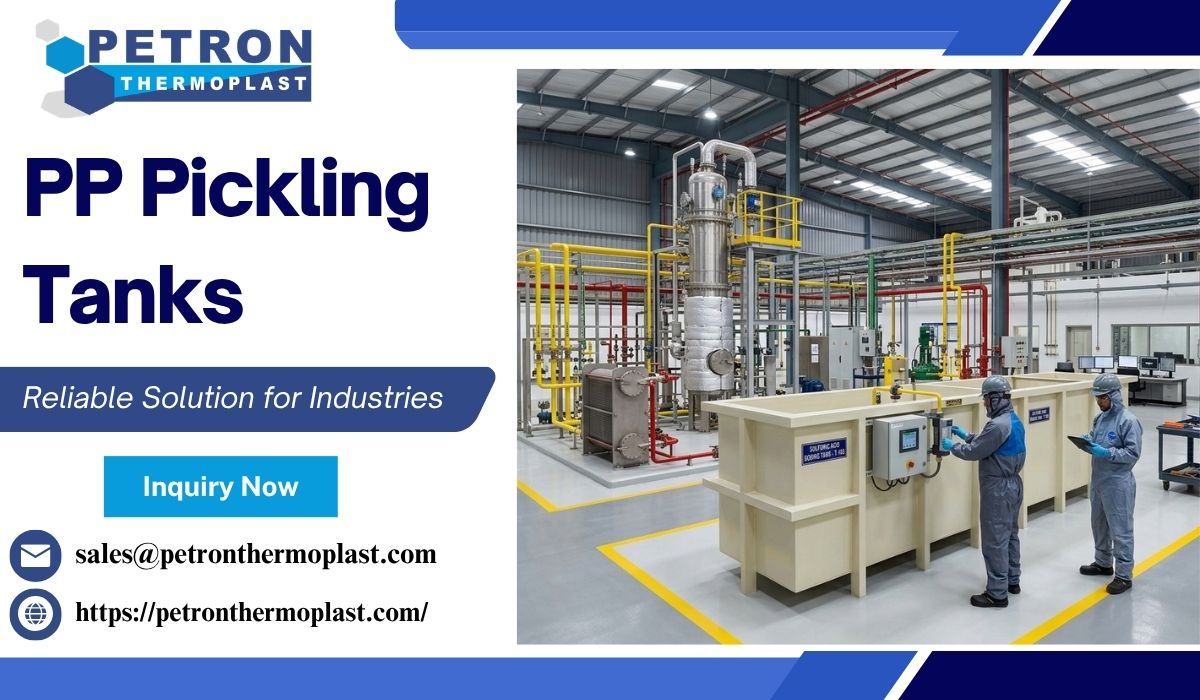
Industrial processing environments require reliable storage and treatment systems capable of handling highly corrosive chemicals and demanding operational conditions. A PP pickling tank is one of the most preferred solutions for industries involved in metal treatment, chemical processing, galvanizing, and surface finishing applications. Manufactured using high quality polypropylene material, these tanks offer excellent resistance against acids, chemicals, corrosion, and temperature variations.
Custom fabrication of PP pickling tanks has become increasingly important because industries often operate with unique process requirements, space limitations, chemical concentrations, and production capacities. Tailor made fabrication ensures that every tank performs efficiently while maintaining long service life and operational safety.
What is a PP Pickling Tank?
A PP pickling tank is a specially fabricated industrial tank designed for pickling operations where metal surfaces are cleaned using acidic solutions. Pickling is commonly used to remove rust, scale, oxidation, and impurities from metal surfaces before further processing such as coating, galvanizing, or painting.
Polypropylene material is widely used for these tanks because of its excellent chemical resistance and fabrication flexibility. PP tanks are suitable for handling hydrochloric acid, sulfuric acid, nitric acid, and other aggressive chemicals used in industrial pickling processes.
These tanks are widely installed in:
- Steel processing plants
- Metal finishing industries
- Electroplating facilities
- Chemical manufacturing plants
- Galvanizing industries
- Automotive component industries
- Engineering and fabrication units
Importance of Custom PP Pickling Tank Fabrication
Every industrial process operates differently, which means standard tank designs may not always provide the best operational performance. Custom fabricated PP pickling tanks are designed according to the exact process requirements of the client.
Customized fabrication helps industries achieve:
- Better chemical handling efficiency
- Improved workflow integration
- Maximum utilization of available space
- Enhanced safety standards
- Longer equipment life
- Reduced maintenance costs
- Higher operational productivity
Manufacturers provide custom fabrication options for dimensions, thickness, reinforcement structures, tank capacity, outlet positioning, and additional accessories.
Features of PP Pickling Tanks
Excellent Chemical Resistance
Polypropylene material offers outstanding resistance against corrosive chemicals, acids, and industrial solutions. This makes PP pickling tanks ideal for aggressive industrial environments.
Lightweight Construction
Compared to metal tanks, PP tanks are lightweight and easier to install. Their reduced weight also simplifies transportation and handling during installation.
High Mechanical Strength
Modern PP pickling tanks are fabricated with reinforced structures that provide excellent durability and structural stability under continuous industrial usage.
Corrosion Free Performance
Unlike steel tanks, polypropylene tanks do not rust or corrode. This significantly increases the operational life of the tank and minimizes maintenance requirements.
Leak Proof Design
Professional fabrication techniques such as butt welding and extrusion welding ensure leak proof tank construction for safe chemical storage and processing.
Long Service Life
PP pickling tanks are designed for long term industrial performance even in highly corrosive operating environments.
Customization Options in PP Pickling Tank Fabrication
Industries often require tanks with specialized configurations. Manufacturers provide multiple customization options to meet specific operational needs.
Tank Size and Capacity
PP pickling tanks can be fabricated in various sizes and capacities depending on the production requirements of the industry. Small tanks for laboratory applications and large tanks for heavy industrial processing are both available.
Shape and Design
Custom tanks can be fabricated in rectangular, square, vertical, or horizontal designs according to installation space and process flow requirements.
Thickness Selection
The thickness of polypropylene sheets used in fabrication depends on factors such as chemical concentration, operating temperature, and tank capacity.
Reinforcement Structures
Heavy duty PP pickling tanks are equipped with external reinforcement supports to maintain structural stability under heavy load conditions.
Outlet and Inlet Positioning
Nozzle positions, drain outlets, overflow systems, and piping connections can be customized for smooth process integration.
Heating and Ventilation Systems
Some industrial applications require integrated heating systems or fume extraction arrangements for safe and efficient operations.
Lining and Insulation
Additional insulation or protective lining can be provided for temperature sensitive applications and enhanced chemical resistance.
Applications of PP Pickling Tanks
Metal Surface Treatment
PP pickling tanks are extensively used for cleaning metal surfaces before galvanizing, coating, or painting processes.
Galvanizing Industries
Galvanizing plants use pickling tanks to remove oxidation and contaminants from steel surfaces before zinc coating.
Electroplating Industries
These tanks help prepare metal surfaces for electroplating applications by ensuring proper cleaning and treatment.
Chemical Processing Plants
Chemical industries use PP pickling tanks for handling corrosive chemicals during manufacturing operations.
Automotive Component Manufacturing
Automotive industries use pickling tanks for cleaning metal components and improving surface quality before assembly.
Engineering Industries
Engineering and fabrication industries use these tanks for various metal cleaning and treatment processes.
Advantages of Polypropylene Material
Polypropylene is considered one of the most suitable thermoplastic materials for industrial tank fabrication.
High Chemical Stability
PP material remains stable even when exposed to aggressive chemicals for long durations.
Cost Effective Solution
Compared to metal or specialized alloy tanks, PP pickling tanks provide a more economical solution with lower maintenance expenses.
Easy Fabrication
Polypropylene sheets can be easily fabricated into custom shapes and sizes without compromising structural integrity.
Temperature Resistance
PP tanks can withstand moderate operating temperatures commonly found in industrial pickling applications.
Low Maintenance
The corrosion resistant nature of polypropylene reduces repair and maintenance requirements.
Manufacturing Process of PP Pickling Tanks
Professional manufacturers follow strict fabrication procedures to ensure high quality and long lasting performance.
Material Selection
High grade polypropylene sheets are selected according to the chemical compatibility and application requirements.
Cutting and Shaping
Precision cutting equipment is used to prepare tank panels according to the approved design specifications.
Welding Process
Advanced welding techniques such as hot air welding and extrusion welding are used for strong and leak proof joints.
Reinforcement Installation
Structural reinforcements are added for large capacity tanks to improve load handling capability.
Quality Inspection
Each tank undergoes dimensional checks, welding inspections, and leak testing before delivery.
Final Finishing
The completed tank is cleaned, inspected, and prepared for installation at the customer site.
Factors to Consider Before Selecting a PP Pickling Tank
Chemical Compatibility
The tank material must be compatible with the chemicals used in the pickling process.
Tank Capacity
Capacity selection should match production volume and operational requirements.
Operating Temperature
Temperature conditions should be evaluated to ensure safe and efficient tank performance.
Installation Space
Proper measurements are important for selecting the correct tank dimensions and design.
Structural Support
Large tanks may require additional support structures depending on installation conditions.
Compliance Standards
Industrial tanks should comply with quality and safety standards for reliable operation.
Why Choose Professional PP Pickling Tank Manufacturers?
Experienced manufacturers understand industrial process requirements and provide customized fabrication solutions with high precision. They use quality raw materials, advanced fabrication technology, and strict testing procedures to deliver reliable industrial tanks.
Professional manufacturers also provide:
- Design consultation
- Custom engineering support
- Installation assistance
- Quality assurance
- Timely project delivery
- After sales support
Conclusion
PP pickling tank fabrication for custom requirements plays a critical role in modern industrial processing applications. These tanks offer superior chemical resistance, long operational life, leak proof performance, and excellent customization flexibility for diverse industrial environments.
Whether used in metal treatment, galvanizing, electroplating, or chemical processing industries, custom fabricated polypropylene pickling tanks provide reliable and cost effective solutions for handling corrosive chemicals safely and efficiently.
Industries looking for durable and high performance pickling systems should invest in professionally fabricated PP pickling tanks designed according to their exact operational requirements. With proper material selection, precision fabrication, and quality engineering, these tanks deliver long term industrial performance with minimal maintenance and maximum operational efficiency.