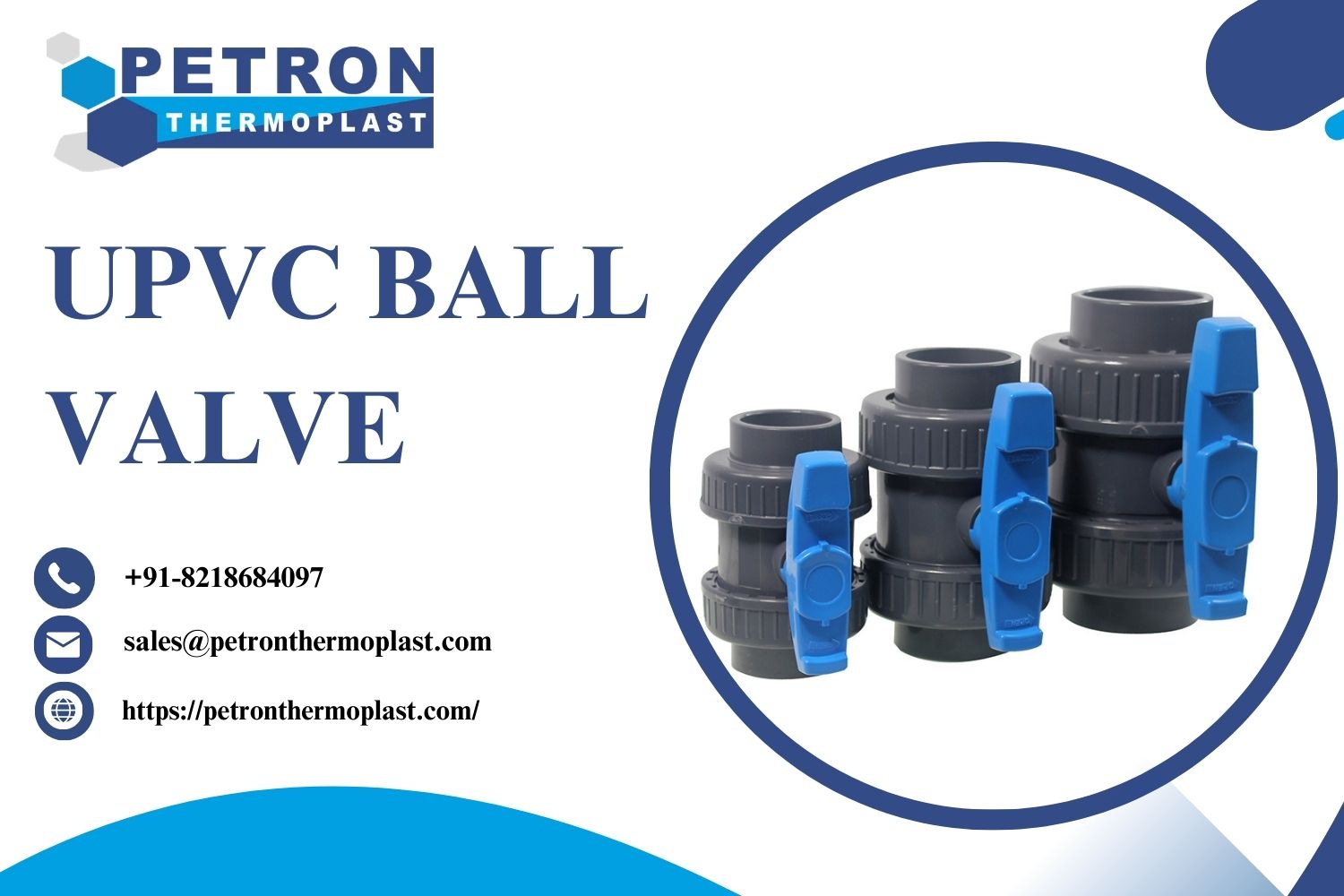
In modern industrial piping systems, efficiency, durability, and reliability are essential for maintaining smooth operations. Among the various flow control devices available today, UPVC ball valves have emerged as one of the most preferred solutions for industries seeking long service life and hassle-free installation. Their lightweight design, chemical resistance, and cost-effectiveness make them ideal for a wide range of applications.
This blog explores how long life UPVC ball valves with easy installation contribute to improved system performance, reduced maintenance costs, and enhanced operational safety across industries.
Introduction to UPVC Ball Valves
UPVC (Unplasticized Polyvinyl Chloride) ball valves are quarter-turn valves designed to regulate, start, and stop fluid flow in piping systems. They operate using a rotating ball with a central bore that aligns with the pipeline when open and blocks the flow when closed.
Unlike metal valves, UPVC ball valves are manufactured from rigid plastic material that does not require plasticizers, resulting in superior mechanical strength and chemical stability. This makes them highly suitable for corrosive and demanding environments. Industries worldwide rely on UPVC ball valves for water distribution, chemical processing, wastewater treatment, agriculture, and industrial manufacturing.
Why Long Life Matters in Industrial Valves?
- Reduced Replacement Costs
Frequent valve replacement leads to increased operational expenses and system downtime. Long-lasting UPVC ball valves minimize the need for replacements, ensuring cost savings over time.
- Improved System Reliability
Durable valves maintain consistent performance even under continuous operation. This reliability is crucial in critical processes where flow disruption can result in production losses.
- Lower Maintenance Requirements
High-quality UPVC ball valves are resistant to corrosion, scaling, and chemical degradation. This significantly reduces the need for regular repairs and servicing.
- Enhanced Safety
Long-life valves prevent leakage, pressure loss, and system failures, ensuring safer working conditions in industrial facilities.
Material Advantages of UPVC Ball Valves
The exceptional durability of UPVC ball valves is largely attributed to their material properties.
Chemical Resistance
UPVC is highly resistant to acids, alkalis, salts, and industrial chemicals. This makes it ideal for chemical plants, pharmaceutical units, and effluent treatment facilities.
Corrosion-Free Performance
Unlike metal valves, UPVC does not rust or corrode, even in humid or chemically aggressive environments.
High Mechanical Strength
UPVC offers excellent tensile and impact strength, enabling valves to withstand pressure fluctuations and mechanical stress.
UV Stability
Many industrial-grade UPVC valves are UV stabilized, making them suitable for outdoor installations and exposed environments.
Smooth Internal Surface
The smooth bore reduces friction, minimizes pressure loss, and prevents material buildup.
Easy Installation: A Key Industrial Advantage
One of the biggest benefits of UPVC ball valves is their simple and quick installation process.
Lightweight Construction
UPVC valves are significantly lighter than metal alternatives, making them easier to handle, transport, and install.
Standardized Connections
UPVC ball valves are available in various connection types:
- Threaded ends
- Solvent cement joints
- Union type connections
- Flanged ends
These standardized fittings ensure compatibility with most piping systems.
Minimal Tool Requirement
Installation typically requires basic tools such as wrenches and solvent cement, eliminating the need for specialized equipment.
Union Design for Easy Removal
Many UPVC ball valves feature a union design that allows easy removal without dismantling the entire pipeline. This is especially useful during maintenance and inspections.
Reduced Installation Time
Quick and straightforward installation reduces labor costs and project timelines, making UPVC ball valves ideal for large-scale industrial projects.
Design Features that Ensure Long Service Life
Modern UPVC ball valves are engineered with advanced design elements that enhance durability and performance.
Precision-Molded Ball
The ball is manufactured with high accuracy, ensuring smooth rotation and tight shut-off.
PTFE Seats and Seals
Most industrial UPVC ball valves use PTFE (Teflon) seats and seals, which provide excellent chemical resistance and leak-proof performance.
Reinforced Valve Body
The thick-walled body improves pressure handling capacity and structural stability.
Ergonomic Handle Design
Heavy-duty handles allow easy operation even after prolonged use, ensuring consistent performance.
Leak-Proof Construction
Advanced sealing systems prevent internal and external leakage, extending valve life.
Industrial Applications of UPVC Ball Valves
Water Treatment and Distribution
UPVC ball valves are widely used in municipal water systems, filtration units, and desalination plants due to their corrosion resistance.
Chemical Processing Plants
Their ability to withstand aggressive chemicals makes them ideal for acid handling, solvent transfer, and chemical dosing systems.
Wastewater and Effluent Treatment
UPVC valves resist contamination, scaling, and chemical attack in wastewater environments.
Power and Energy Sector
They are used in cooling water systems, auxiliary pipelines, and chemical dosing lines.
Agriculture and Irrigation
Lightweight and durable UPVC ball valves are popular in irrigation networks and fertilizer delivery systems.
Pharmaceutical and Food Processing
Non-reactive surfaces and contamination resistance make them suitable for hygienic applications.
Maintenance Benefits of UPVC Ball Valves
Although UPVC ball valves are known for low maintenance, proper care further enhances their lifespan.
Minimal Cleaning Requirements
Smooth internal surfaces prevent deposits, reducing the need for frequent cleaning.
Easy Component Replacement
Union-type designs allow fast replacement of seals and seats when required.
Resistance to Scaling
UPVC does not promote scale formation, ensuring long-term flow efficiency.
Long Lubrication-Free Operation
Unlike metal valves, UPVC valves usually do not require periodic lubrication.
Reduced Downtime
Low maintenance needs translate to uninterrupted production cycles.
Environmental and Economic Advantages
Eco-Friendly Manufacturing
UPVC production requires less energy compared to metal processing, resulting in lower carbon emissions.
Long Product Lifecycle
Extended service life reduces material waste and environmental impact.
Cost Efficiency
Lower procurement, installation, and maintenance costs make UPVC ball valves economically attractive.
Energy Savings
Smooth flow characteristics reduce pumping energy requirements.
Sustainable Infrastructure Development
UPVC valves support sustainable industrial practices through durability and recyclability.
Choosing the Right UPVC Ball Valve
To maximize performance and longevity, selecting the right valve is crucial.
Consider Operating Conditions
- Working pressure
- Temperature range
- Chemical compatibility
- Flow requirements
Evaluate Connection Type
Choose appropriate end connections based on pipeline design and maintenance needs.
Check Certifications
Ensure compliance with international quality and safety standards.
Assess Manufacturer Reputation
Reliable manufacturers provide consistent quality, technical support, and customization options.
Verify Material Grade
High-grade UPVC ensures superior mechanical and chemical performance.
Role of Petron Thermoplast in Quality Valve Manufacturing
As a leading industrial plastics manufacturer, Petron Thermoplast focuses on delivering high-performance UPVC ball valves that meet international standards. By using advanced molding technology, strict quality control, and premium raw materials, the company ensures that every valve offers exceptional durability and easy installation.
Their product range is designed to serve diverse sectors such as chemicals, water treatment, infrastructure, power generation, and manufacturing industries. Customized solutions, technical expertise, and reliable supply chains make them a trusted partner for domestic and international projects.
Installation Best Practices for Long-Term Performance
To ensure optimal valve life, proper installation is essential.
Step 1: Pipeline Preparation
Clean and align the pipe ends before installation.
Step 2: Check Valve Orientation
Ensure correct flow direction and handle positioning.
Step 3: Secure Connections
Apply solvent cement or thread sealant properly for leak-free joints.
Step 4: Avoid Over-Tightening
Excessive force can damage threads and seals.
Step 5: Conduct Pressure Testing
Test the system after installation to detect leaks or misalignment.
Following these steps ensures reliable performance and extends valve service life.
Future Trends in UPVC Ball Valve Technology
With growing industrial automation and sustainability initiatives, UPVC valve technology continues to evolve.
- Smart valve integration with sensors
- Improved UV-resistant formulations
- Enhanced pressure ratings
- Lightweight composite reinforcements
- Automation-compatible actuators
These innovations will further strengthen the role of UPVC ball valves in modern industrial infrastructure.
Conclusion
Long life UPVC ball valves with easy installation offer a perfect balance of durability, efficiency, and cost-effectiveness. Their corrosion resistance, lightweight structure, low maintenance needs, and reliable performance make them indispensable in today’s industrial piping systems.
From chemical plants and water treatment facilities to power stations and agricultural networks, UPVC ball valves continue to deliver dependable flow control solutions. By choosing high-quality products from experienced manufacturers like Petron Thermoplast and following proper installation practices, industries can achieve long-term operational excellence.
Investing in premium UPVC ball valves is not just a technical decision—it is a strategic move toward sustainable, safe, and efficient industrial operations.