Efficient fluid management is the backbone of every industrial operation. Whether it involves chemical processing, water treatment, manufacturing, pharmaceuticals, or utility systems, maintaining precise control over fluid flow is essential for productivity, safety, and operational efficiency. One of the most important components in any fluid handling system is the valve, which regulates, directs, and controls the movement of liquids throughout the piping network.
Among the various valve types available, the CPVC Ball Valve has become a preferred choice for industries seeking reliable performance, excellent chemical resistance, and long-term durability. Engineered to handle demanding industrial environments, CPVC ball valves offer advanced flow control capabilities while reducing maintenance requirements and operational costs.
As modern industries continue to upgrade their infrastructure, CPVC ball valves are helping businesses achieve next-level industrial fluid management through superior reliability and performance.
What is a CPVC Ball Valve?
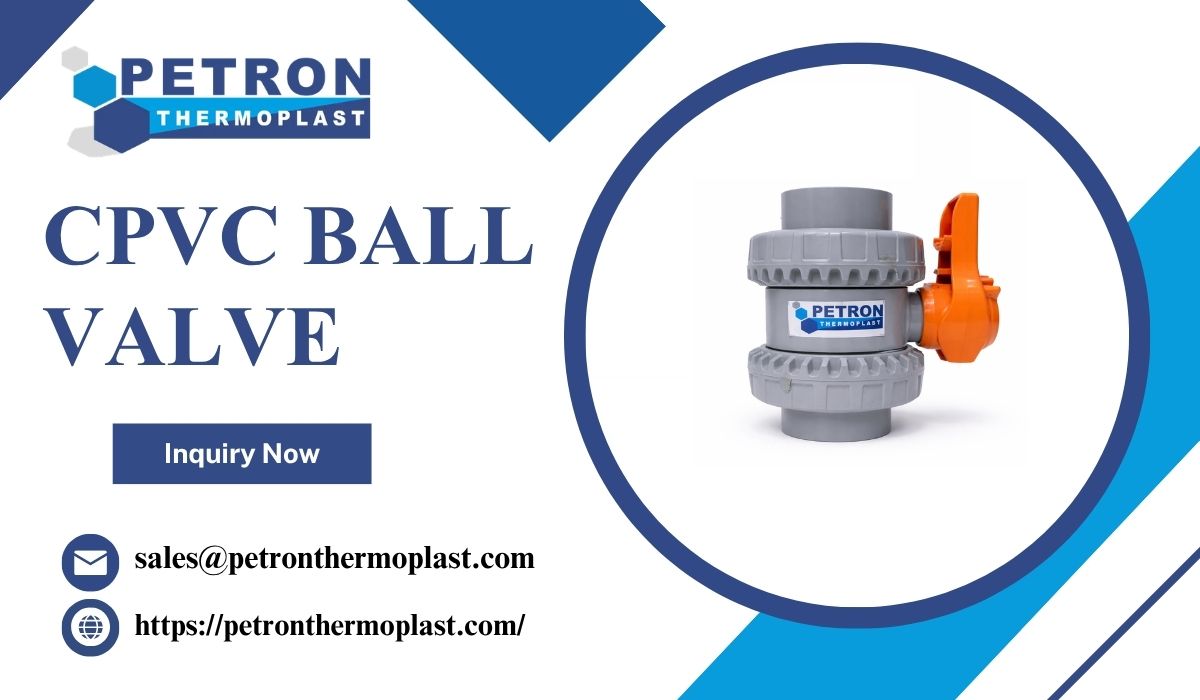
A CPVC Ball Valve is a quarter-turn valve manufactured from Chlorinated Polyvinyl Chloride (CPVC). It uses a rotating ball with a central bore to control fluid flow through a pipeline.
When the handle is turned parallel to the pipeline, the valve opens and allows fluid to pass. When rotated 90 degrees, the valve closes and stops the flow completely.
CPVC ball valves are commonly used for:
- Chemical transfer systems
- Water treatment facilities
- Industrial process piping
- Acid handling applications
- Utility services
- Manufacturing operations
- Fluid distribution networks
Their simple yet effective design makes them one of the most reliable flow control solutions available.
Understanding CPVC Material
CPVC is an advanced thermoplastic material developed by chlorinating standard PVC. This process significantly improves temperature resistance and chemical compatibility.
Key properties of CPVC include:
- Excellent chemical resistance
- High temperature tolerance
- Corrosion resistance
- Superior mechanical strength
- Long service life
- Lightweight construction
- Smooth internal surfaces
- Low maintenance requirements
These characteristics make CPVC an ideal material for industrial valves and piping systems.
Why Fluid Management Matters in Industry?
Industrial facilities depend on accurate and reliable fluid control to ensure smooth operations.
Effective fluid management helps:
- Maintain process efficiency
- Prevent leaks and contamination
- Reduce downtime
- Improve workplace safety
- Protect equipment
- Optimize production output
- Minimize maintenance expenses
A high-quality CPVC ball valve contributes significantly to achieving these operational goals.
Features of CPVC Ball Valves
Excellent Chemical Resistance
CPVC valves can withstand exposure to a wide range of corrosive chemicals, acids, alkalis, and industrial fluids.
High Temperature Capability
CPVC performs effectively in elevated temperature applications where standard PVC may not be suitable.
Leak-Proof Performance
Precision manufacturing and advanced sealing systems help prevent leakage and fluid loss.
Corrosion-Free Operation
Unlike metal valves, CPVC does not rust, corrode, or deteriorate due to chemical exposure.
Smooth Flow Characteristics
The full-port design minimizes pressure loss and promotes efficient fluid movement.
Lightweight Construction
CPVC valves are easier to transport, install, and maintain than metal alternatives.
Long Service Life
Durable construction ensures reliable performance over extended operating periods.
Benefits of Using CPVC Ball Valves
Improved Process Efficiency
Accurate flow control helps maintain consistent process conditions and production quality.
Reduced Maintenance Costs
Corrosion-resistant materials minimize maintenance requirements and downtime.
Enhanced Safety
Leak-resistant construction improves workplace safety and environmental protection.
Cost-Effective Performance
CPVC valves offer an excellent balance of performance and affordability.
Easy Installation
Lightweight construction reduces installation time and labor costs.
Operational Reliability
CPVC ball valves provide dependable performance in demanding industrial applications.
Applications of CPVC Ball Valves
Chemical Processing Plants
CPVC ball valves are widely used for handling corrosive chemicals and process fluids.
Water Treatment Facilities
They help regulate water flow and chemical dosing systems.
Pharmaceutical Industries
Reliable fluid control supports high-quality production processes.
Industrial Manufacturing
Manufacturing facilities use CPVC valves for utility and process piping systems.
Electroplating Operations
Chemical resistance makes CPVC suitable for plating and surface treatment applications.
Food and Beverage Industries
Selected applications utilize CPVC valves for fluid management and processing systems.
Commercial Utility Systems
CPVC valves provide dependable performance in water distribution networks.
Why Industries Prefer CPVC Ball Valves?
Superior Chemical Compatibility
CPVC performs exceptionally well when handling aggressive chemicals.
Corrosion Resistance
The material eliminates many of the corrosion problems associated with metal valves.
Lower Lifecycle Costs
Reduced maintenance and long service life contribute to lower overall ownership costs.
Reliable Shut-Off Capability
The ball valve design provides dependable isolation and flow control.
High Durability
CPVC withstands harsh industrial environments while maintaining performance.
Energy Efficiency
Smooth internal surfaces reduce flow resistance and pressure losses.
Types of CPVC Ball Valves
Single Union Ball Valves
Designed for compact installations and routine flow control applications.
Double Union Ball Valves
Allow easy removal and maintenance without disturbing the piping system.
Manual Ball Valves
Operated manually using a lever handle.
Actuated Ball Valves
Integrated with pneumatic or electric actuators for automated operation.
Full-Port Ball Valves
Provide unrestricted flow with minimal pressure drop.
Custom Ball Valves
Engineered for specialized industrial requirements.
Factors to Consider When Selecting a CPVC Ball Valve
Chemical Compatibility
Ensure the valve material is suitable for the intended process fluid.
Temperature Requirements
Evaluate operating temperatures before selecting the valve.
Pressure Conditions
Verify that the valve meets system pressure specifications.
Flow Requirements
Choose the appropriate valve size for optimal performance.
Connection Type
Select compatible connections for the piping system.
Automation Needs
Determine whether manual or automated operation is required.
Maintenance of CPVC Ball Valves
Although CPVC ball valves require minimal maintenance, periodic inspections help ensure optimal performance.
Recommended maintenance activities include:
- Checking seals and connections
- Inspecting valve operation
- Cleaning external surfaces
- Monitoring for wear or damage
- Verifying proper handle movement
Preventive maintenance extends valve life and improves system reliability.
Advantages Over Traditional Metal Valves
Many industries are replacing conventional metal valves with CPVC alternatives due to their numerous advantages.
No Rust or Corrosion
CPVC remains unaffected by moisture and many industrial chemicals.
Lightweight Design
Installation and maintenance become faster and easier.
Lower Maintenance Requirements
Corrosion-free construction minimizes repair costs.
Better Chemical Resistance
CPVC performs well in applications involving acids and corrosive fluids.
Cost Savings
Reduced maintenance and extended service life lower total ownership costs.
Consistent Performance
CPVC maintains reliable flow control throughout its operational life.
Why Choose Petron Thermoplast?
Petron Thermoplast is a trusted manufacturer and supplier of industrial thermoplastic valves, piping systems, and custom-engineered fluid handling solutions. The company offers high-quality CPVC ball valves designed to meet the needs of modern industries.
Key Advantages
- Premium-grade CPVC materials
- Precision engineering
- Excellent chemical resistance
- Leak-proof sealing systems
- Custom manufacturing capabilities
- Strict quality control standards
- Competitive pricing
- Fast delivery schedules
- Technical support and consultation
- Global supply capability
Petron Thermoplast serves industries including chemical processing, water treatment, pharmaceuticals, manufacturing, electroplating, and infrastructure development.
Conclusion
A CPVC Ball Valve for next-level industrial fluid management provides an efficient, durable, and cost-effective solution for controlling fluid flow in demanding industrial environments. With excellent chemical resistance, corrosion-free performance, reliable sealing, and long service life, CPVC ball valves continue to play a critical role in modern fluid handling systems.
By choosing high-quality CPVC ball valves from an experienced manufacturer like Petron Thermoplast, industries can improve process efficiency, enhance safety, reduce maintenance costs, and achieve reliable long-term performance. As industrial requirements continue to evolve, CPVC ball valves remain one of the most dependable solutions for advanced fluid management applications.