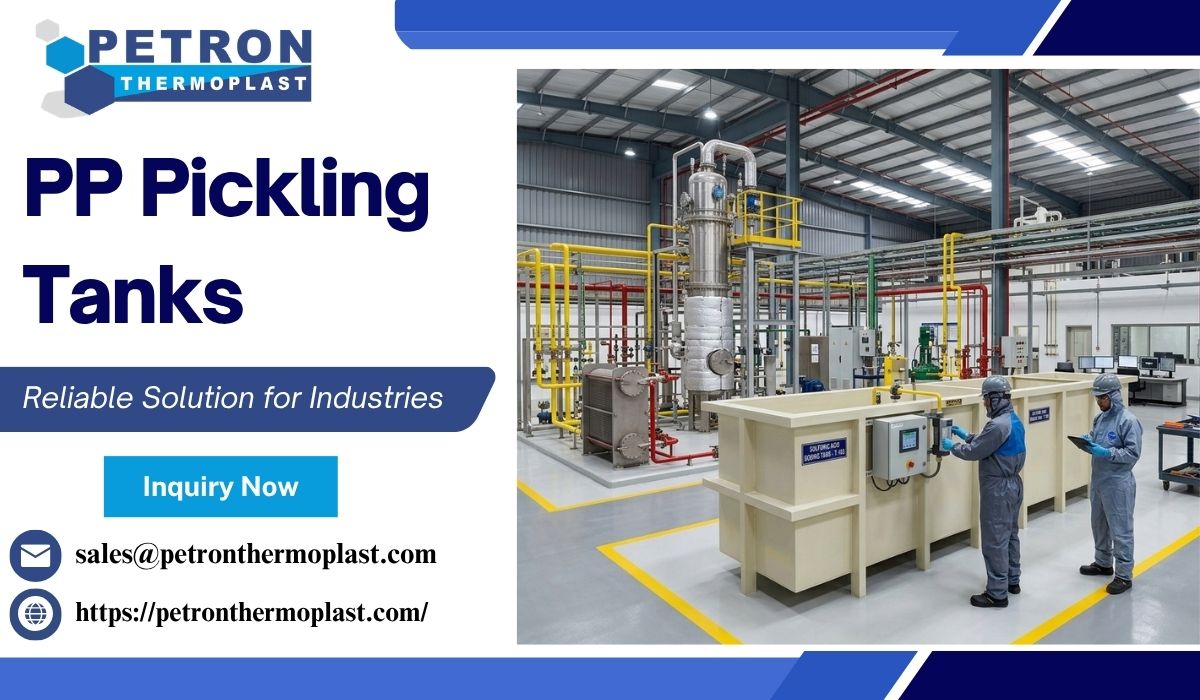
Industrial metal processing and surface treatment operations require highly durable storage and processing equipment capable of handling aggressive acids and corrosive chemicals. In industries such as steel processing, metal fabrication, galvanizing, electroplating, and surface finishing, PP pickling tanks play an important role in maintaining clean metal surfaces before coating, welding, or further manufacturing processes.
Traditional metal tanks often face severe corrosion issues when exposed to strong industrial acids. Because of this, industries increasingly prefer PP pickling tanks due to their excellent chemical resistance, corrosion-free performance, and long operational life.
PP pickling tanks are specially designed to handle corrosive chemicals used during industrial pickling processes. Their superior industrial chemical resistance helps industries improve operational safety, reduce maintenance requirements, and achieve long-term process reliability.
Understanding PP Pickling Tanks
PP stands for Polypropylene, a high-performance thermoplastic material widely used in industrial chemical handling systems because of its excellent resistance against corrosive chemicals.
A PP pickling tank is a specially fabricated industrial tank used for:
- Acid pickling
- Metal cleaning
- Surface preparation
- Chemical treatment
- Industrial dipping operations
These tanks are designed to safely contain aggressive chemical solutions used during metal treatment processes.
PP pickling tanks are commonly used for handling:
- Hydrochloric acid
- Sulfuric acid
- Nitric acid
- Phosphoric acid
- Cleaning chemicals
- Industrial treatment solutions
Their durable thermoplastic construction makes them highly suitable for continuous industrial chemical exposure.
Importance of Chemical Resistance in Pickling Tanks
Industrial pickling operations involve highly corrosive chemicals capable of damaging conventional tank materials.
Poor chemical resistance can result in:
- Tank corrosion
- Leakage
- Structural failure
- Production downtime
- Safety risks
- Increased maintenance costs
Industrial facilities require pickling tanks capable of operating safely under harsh chemical conditions for extended periods.
Superior chemical resistance helps:
- Improve operational safety
- Extend tank lifespan
- Reduce maintenance
- Improve process reliability
- Prevent chemical contamination
This is why polypropylene pickling tanks are widely preferred in modern industrial applications.
Why PP Material Is Suitable for Pickling Tanks?
Polypropylene offers several advantages that make it ideal for industrial acid handling and chemical treatment systems.
Excellent Chemical Resistance
PP material provides strong resistance against a wide range of industrial chemicals and acids.
This includes:
- Corrosive acids
- Alkalis
- Industrial cleaning agents
- Chemical treatment solutions
Its chemical stability helps maintain long-term structural performance.
Corrosion-Free Performance
Unlike metal tanks, PP pickling tanks do not rust or corrode under acid exposure.
Corrosion-free operation helps:
- Improve reliability
- Reduce maintenance
- Increase service life
- Maintain safe chemical containment
Lightweight Construction
PP tanks are significantly lighter than metallic alternatives.
This simplifies:
- Transportation
- Installation
- Handling
- System integration
Strong Mechanical Durability
Industrial PP pickling tanks are designed to withstand:
- Continuous industrial operation
- Mechanical stress
- Process vibration
- Industrial chemical exposure
Long Operational Life
High-quality polypropylene tanks provide dependable performance even under aggressive industrial conditions.
Key Features of PP Pickling Tanks
Modern PP pickling tanks are designed for safe and efficient industrial operation.
Leak-Proof Construction
Industrial acid handling requires reliable and secure chemical containment.
PP pickling tanks are designed for:
- Leak prevention
- Safe chemical storage
- Stable process operation
- Reliable fluid containment
Smooth Internal Surface
Smooth internal surfaces reduce:
- Chemical buildup
- Sediment accumulation
- Surface contamination
This also simplifies tank cleaning and maintenance.
Custom Fabrication Options
PP pickling tanks can be manufactured in:
- Various capacities
- Custom dimensions
- Different configurations
- Process-specific designs
This flexibility supports different industrial applications.
High Temperature Resistance
PP material performs effectively under moderate industrial temperature conditions commonly found in pickling operations.
Low Maintenance Requirements
Corrosion-free thermoplastic construction significantly reduces maintenance requirements compared to conventional metal systems.
Applications of PP Pickling Tanks
PP pickling tanks are widely used across industries handling metal treatment and chemical processing operations.
Steel Processing Industries
Steel manufacturing plants use pickling tanks for:
- Scale removal
- Surface cleaning
- Acid treatment
- Metal preparation
Metal Fabrication Industries
Metal fabrication facilities require clean surfaces before:
- Welding
- Coating
- Painting
- Finishing operations
Electroplating Industries
Electroplating plants use pickling tanks for:
- Metal surface preparation
- Cleaning operations
- Acid dipping processes
Galvanizing Plants
Galvanizing facilities require pickling operations to remove surface contaminants before zinc coating.
Surface Treatment Industries
PP pickling tanks are widely used in:
- Surface finishing plants
- Industrial chemical treatment systems
- Metal preparation facilities
Advantages of PP Pickling Tanks Over Metal Tanks
Industries increasingly replace conventional metal tanks with polypropylene systems because of their superior industrial performance.
| Feature | PP Pickling Tank | Metal Tank |
| Chemical Resistance | Excellent | Limited |
| Corrosion Resistance | Excellent | Poor |
| Maintenance | Low | High |
| Weight | Lightweight | Heavy |
| Service Life | Long | Moderate |
| Leakage Risk | Low | Higher |
| Installation Cost | Lower | Higher |
Factors to Consider When Selecting a PP Pickling Tank
Choosing the correct pickling tank is important for maintaining safe and efficient industrial operation.
Chemical Compatibility
Ensure compatibility between the tank material and process chemicals.
Tank Capacity
Select the appropriate tank size according to operational requirements.
Operating Temperature
Industrial temperature conditions should match the material capability.
Structural Design
Proper structural design improves:
- Safety
- Stability
- Operational reliability
Fabrication Quality
High manufacturing standards improve:
- Tank durability
- Leak resistance
- Long-term performance
Installation Benefits of PP Pickling Tanks
Industrial PP tanks simplify installation and process integration.
Lightweight Handling
The lightweight structure reduces installation effort and labor requirements.
Easy Integration
PP tanks can be integrated into different industrial process systems.
Flexible Design Options
Custom fabrication supports project-specific industrial layouts.
Maintenance Benefits of PP Pickling Tanks
Low maintenance is one of the biggest advantages of polypropylene tank systems.
Corrosion-Free Surface
PP tanks do not require anti-corrosion coatings or protective treatment.
Reduced Repair Frequency
Chemical-resistant construction minimizes unexpected damage and leakage.
Easy Cleaning
Smooth surfaces simplify cleaning procedures and improve hygiene.
Long-Term Reliability
Durable thermoplastic construction supports dependable long-term industrial operation.
Environmental and Economic Benefits
Modern industries focus heavily on cost-efficient and environmentally responsible infrastructure.
PP pickling tanks support these goals through:
- Long operational life
- Reduced maintenance waste
- Lower replacement frequency
- Improved chemical containment
- Better process efficiency
Their durable construction also helps reduce long-term infrastructure costs.
Importance of Choosing the Right Manufacturer
The quality of industrial pickling tanks depends heavily on manufacturing standards and fabrication expertise.
A trusted manufacturer provides:
- Precision fabrication
- Industrial-grade materials
- Technical support
- Reliable product quality
- Custom engineering solutions
High manufacturing standards improve industrial safety and operational performance.
Why Industries Prefer PP Pickling Tanks?
Industrial facilities handling corrosive acids require reliable and durable chemical containment systems.
PP pickling tanks provide:
- Superior industrial chemical resistance
- Corrosion-free operation
- Leak-proof construction
- Long operational life
- Low maintenance requirements
- Safe acid handling performance
These advantages make them highly suitable for modern industrial pickling and chemical treatment applications.
Future Demand for PP Pickling Tanks
The demand for polypropylene chemical tanks continues to increase as industries invest in:
- Corrosion-resistant infrastructure
- Advanced surface treatment systems
- Long-lasting chemical processing equipment
- Safe acid handling solutions
Modern industrial facilities increasingly prefer thermoplastic tanks because of their reliability and operational efficiency.
Conclusion
PP pickling tanks with superior industrial chemical resistance provide reliable and durable solutions for metal treatment and chemical processing industries. Their excellent corrosion resistance, leak-proof performance, lightweight construction, and long operational life help industries maintain safe and efficient acid handling operations.
From steel processing plants and galvanizing facilities to electroplating industries and surface treatment systems, polypropylene pickling tanks support reliable industrial performance while reducing maintenance costs and operational downtime.
Choosing high-quality PP pickling tanks from a trusted manufacturer like Petron Thermoplast helps industries improve process safety, maintain efficient chemical treatment systems, and achieve dependable long-term industrial operation.