The global skincare industry continues to evolve beyond basic cleansing and moisturizing products, with consumers increasingly seeking specialized solutions that support long-term skin health. Among these products, skin toners have emerged as an important category, driven by changing beauty routines, greater awareness of ingredient science, and the growing influence of dermatology-backed skincare practices.
According to the study published by Vyansa Intelligence, the global skin toner industry is projected to witness steady growth throughout the forecast period. The expansion reflects a broader shift toward preventive skincare, personalized beauty regimens, and products designed to address specific skin concerns such as hydration, acne management, pore refinement, and skin barrier support.
The Evolution of Skin Toners in Contemporary Beauty
Historically, skin toners were often associated with alcohol-based formulations intended to remove residual impurities after cleansing. However, product development within the skincare sector has significantly transformed the category.
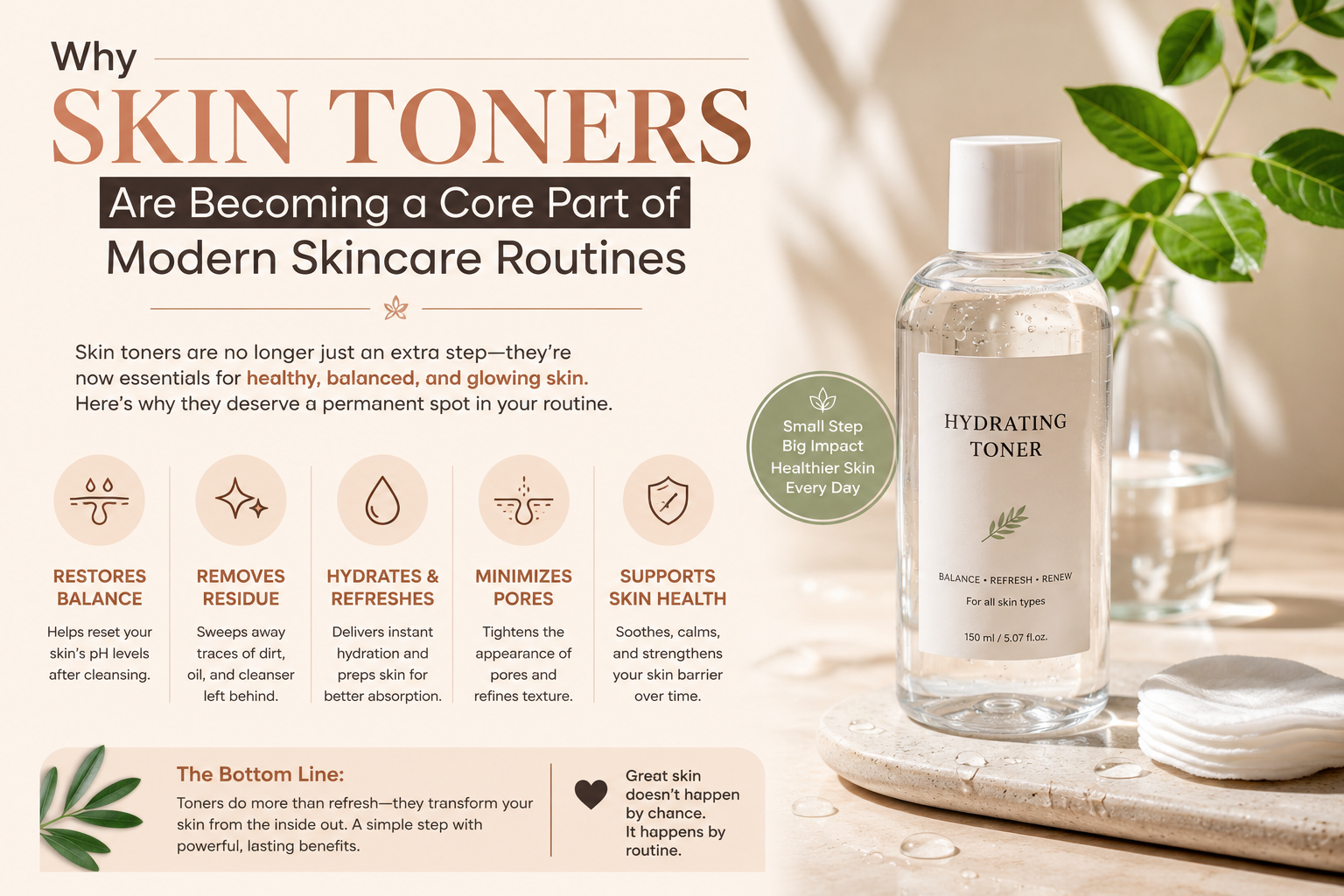
Modern skin toners are now formulated with ingredients designed to hydrate, soothe, exfoliate, and balance the skin. Rather than serving as a simple cleansing step, toners have become multifunctional products integrated into comprehensive skincare routines.
This transition has been supported by consumer education across digital platforms, where skincare professionals, dermatologists, and beauty experts increasingly discuss the importance of maintaining skin balance and preparing the skin for serums and moisturizers.
As skincare routines become more sophisticated, consumers are viewing toners as supportive products that contribute to overall skin wellness rather than optional additions.
Growing Demand for Hydration-Focused Skincare
One of the most influential trends shaping the skin toner industry is the increasing focus on hydration.
Environmental stressors, air pollution, prolonged screen exposure, and changing climate conditions have heightened concerns regarding skin dryness and barrier damage. As a result, consumers are actively seeking products that help retain moisture while supporting skin resilience.
Hydrating toners containing ingredients such as hyaluronic acid, glycerin, aloe vera, and botanical extracts are gaining attention across both premium and mass-market segments. These formulations are often positioned as gentle products suitable for daily use and multiple skin types.
The growing popularity of hydration-focused skincare reflects a wider industry movement toward maintaining skin health rather than solely addressing visible cosmetic concerns.
Influence of Ingredient Transparency
Ingredient awareness has become a defining factor in skincare purchasing decisions.
Consumers today frequently examine ingredient labels and seek greater transparency regarding product formulations. This trend has encouraged manufacturers to emphasize ingredients that are perceived as safe, effective, and supported by scientific research.
Natural extracts, fermented ingredients, probiotics, green tea, witch hazel, chamomile, rice water, and centella asiatica are increasingly incorporated into skin toner formulations. Interest in clean-label products has also encouraged companies to reduce the use of ingredients that some consumers prefer to avoid, including certain synthetic fragrances and harsh alcohols.
Organizations such as the U.S. Food & Drug Administration (FDA) Cosmetics Program continue to provide regulatory oversight and guidance related to cosmetic product safety, helping shape industry standards and consumer expectations.
Social Media and Beauty Communities Continue to Shape Demand
Digital platforms have become a major influence on skincare purchasing behavior.
Beauty creators, skincare educators, and dermatology-focused content channels frequently discuss skincare layering techniques, product ingredients, and skin concerns. This continuous flow of information has contributed to greater awareness of toner applications and benefits.
Short-form video platforms have accelerated the visibility of skincare routines, particularly among younger consumers who often adopt multi-step regimens inspired by beauty influencers and skincare professionals.
The widespread sharing of skincare experiences has also increased demand for products that target specific concerns, including redness, acne, excess oil production, and uneven skin texture.
As consumers become more informed, they often seek products supported by both user experiences and scientific credibility.
Expansion of Korean and Japanese Beauty Practices
Asian beauty trends continue to influence skincare consumption patterns worldwide.
Korean beauty, commonly referred to as K-beauty, and Japanese beauty philosophies have played a significant role in popularizing toner usage. Multi-step skincare routines often emphasize hydration, skin preparation, and gentle product layering, creating a favorable environment for toner adoption.
Many consumers have embraced skincare approaches that prioritize long-term skin maintenance rather than reactive treatment. This shift has encouraged the use of lightweight, hydrating toners designed to support overall skin condition.
The growing international reach of Asian skincare brands has contributed to product innovation across global markets, prompting manufacturers to introduce new formulations tailored to evolving consumer preferences.
E-Commerce Creates New Opportunities
Online retail channels continue to reshape how consumers discover and purchase skincare products.
Digital marketplaces provide access to a wide range of domestic and international brands, enabling consumers to compare ingredients, reviews, and pricing before making purchasing decisions.
E-commerce platforms have also allowed emerging skincare brands to reach broader audiences without relying exclusively on traditional retail distribution networks. This accessibility has increased competition while encouraging innovation throughout the skin toner segment.
Subscription models, direct-to-consumer strategies, and personalized skincare recommendations are further supporting market development by improving product accessibility and customer engagement.
Sustainability Is Influencing Product Development
Environmental considerations are becoming increasingly important within the beauty and personal care industry.
Consumers are paying greater attention to packaging materials, ingredient sourcing practices, and corporate sustainability initiatives. In response, skincare companies are exploring recyclable packaging solutions, refill systems, and environmentally responsible sourcing strategies.
Industry organizations such as the United Nations Environment Programme (UNEP) Sustainable Consumption and Production Initiative continue to highlight the importance of responsible production and consumption practices across consumer goods industries.
As sustainability expectations rise, companies that align product development with environmental goals may gain stronger consumer trust and long-term brand recognition.
Product Innovation Supports Market Expansion
Innovation remains a central factor influencing the future direction of the skin toner industry.
Manufacturers are increasingly developing targeted formulations designed for specific skin conditions and demographic groups. Products addressing acne-prone skin, sensitive skin, mature skin, and combination skin are becoming more widely available.
Advanced ingredient technologies, microbiome-friendly formulations, and dermatologist-developed products are contributing to ongoing category expansion. At the same time, companies are investing in research to improve product efficacy while maintaining skin compatibility.
The integration of scientific research with consumer preferences is expected to remain a key differentiator in a highly competitive skincare landscape.
Regional Trends Reflect Diverse Consumer Preferences
Consumer behavior varies considerably across regions, influencing how skin toner products are formulated and marketed.
North America continues to benefit from growing skincare awareness and demand for dermatologist-supported products. Europe maintains strong interest in ingredient transparency, sustainability, and regulatory compliance.
Meanwhile, Asia-Pacific remains one of the most influential regions due to deeply established skincare cultures, rapid beauty innovation, and strong consumer engagement with skincare routines. Expanding urban populations and rising disposable incomes are further supporting product adoption across emerging markets.
These regional differences encourage manufacturers to develop localized strategies that reflect varying skincare needs and purchasing behaviors.
Looking Ahead
The skin toner category has evolved from a niche skincare step into a widely recognized component of modern beauty routines. Growing consumer awareness, increased focus on hydration, ingredient transparency, digital influence, and sustainability considerations continue to shape industry development.
As skincare consumers seek products that combine effectiveness, convenience, and scientific credibility, skin toners are expected to maintain their relevance within broader personal care and wellness trends. Ongoing innovation and changing consumer expectations are likely to support continued market expansion while encouraging manufacturers to deliver increasingly specialized and evidence-based skincare solutions.