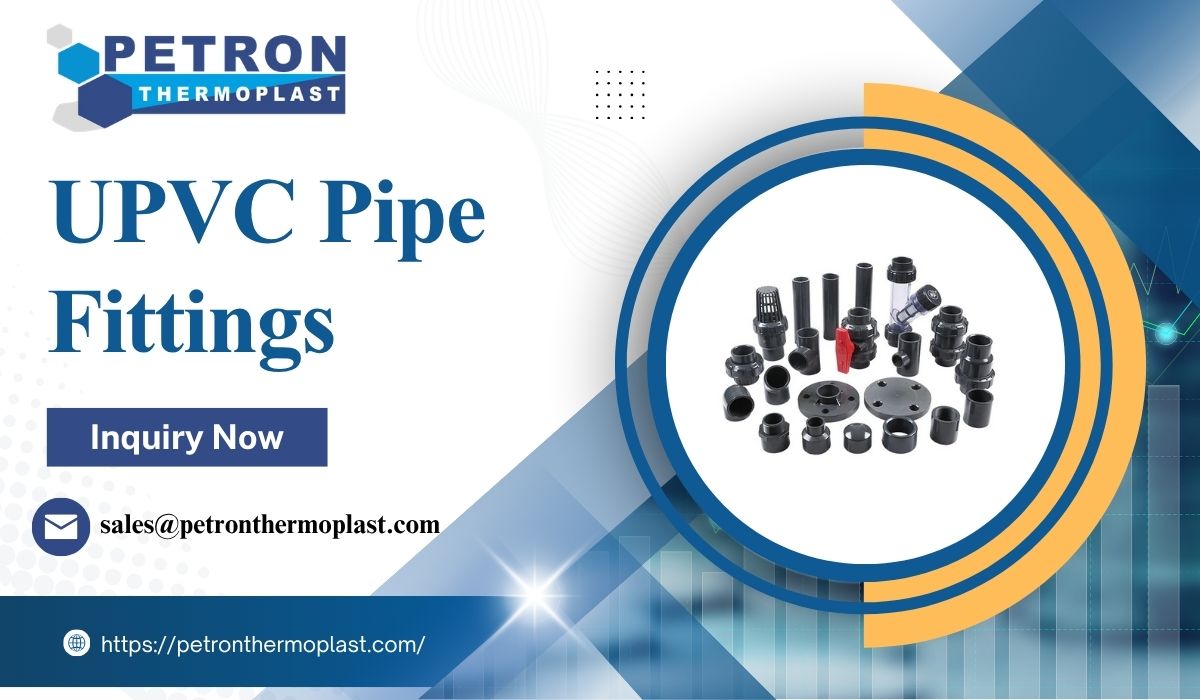
Efficient chemical management systems require piping components that ensure corrosion resistance, leak-proof performance, flow efficiency, and long-term operational stability. UPVC pipes fittings are widely adopted in modern chemical handling infrastructure due to their chemical inertness, smooth internal surfaces, and compatibility with automated process systems. When integrated into smart chemical management systems, UPVC (Unplasticized Polyvinyl Chloride) fittings contribute to precise fluid control, reduced maintenance, and enhanced process safety.
Role of Piping in Chemical Management Systems
Chemical management systems involve storage, dosing, transfer, and distribution of aggressive fluids. The piping network must maintain:
- Chemical integrity of transported media
- Zero or minimal leakage
- Stable pressure and flow conditions
- Compatibility with automation and monitoring systems
UPVC pipe fittings play a critical role in connecting pipelines, directing flow, and ensuring system integrity across these functions.
Material Overview: UPVC
UPVC is a rigid thermoplastic material engineered for industrial fluid handling applications.
Key Material Properties
- Density: 1.38 – 1.45 g/cm³
- Tensile Strength: 45 – 60 MPa
- Maximum Operating Temperature: up to 60°C
- Excellent resistance to acids, alkalis, and salts
- Low thermal conductivity
- Non-corrosive and non-reactive
These properties make UPVC fittings suitable for handling a wide range of industrial chemicals.
Integration with Smart Systems
Smart chemical management systems incorporate sensors, automated valves, and digital monitoring platforms to optimize operations.
Compatibility Features of UPVC Fittings
- Dimensional accuracy for seamless integration
- Compatibility with actuated valves and flow sensors
- Support for modular piping layouts
- Stable performance under continuous monitoring conditions
UPVC fittings ensure reliable physical infrastructure for digitally controlled systems.
Key Features of UPVC Pipe Fittings
Corrosion Resistance
UPVC fittings are resistant to:
- Mineral acids (e.g., hydrochloric acid at controlled concentrations)
- Alkalis and salts
- Industrial effluents
This prevents degradation and extends system life.
Leak-Proof Jointing
- Solvent cement joints create homogeneous bonds
- Eliminates gaps and potential leakage points
- Ensures safe chemical containment
Smooth Internal Surface
- Low surface roughness reduces friction
- Prevents scaling and deposition
- Maintains consistent flow rates
Lightweight Construction
- Simplifies installation and maintenance
- Reduces structural load on support systems
Dimensional Stability
- Maintains shape under varying operating conditions
- Ensures alignment with connected components
Types of UPVC Pipe Fittings in Chemical Systems
Elbows
- Used to change flow direction
- Designed to minimize turbulence
Tees
- Used for branching pipelines
- Maintains flow distribution efficiency
Reducers
- Enables smooth transition between pipe sizes
- Reduces pressure loss
Couplers
- Connect pipe sections
- Ensure continuous flow path
Flanges
- Facilitate easy disassembly and maintenance
- Used in larger diameter systems
Technical Specifications
Typical UPVC pipe fitting specifications:
- Size Range: 20 mm to 400 mm
- Pressure Ratings: PN6, PN10, PN16
- Temperature Range: 0°C to 60°C
- Standards: ASTM D2466, DIN 8063, ISO 1452
- Jointing Method: Solvent cement, threaded
Flow Efficiency in Chemical Systems
Efficient chemical transport depends on minimizing energy losses and maintaining consistent flow.
Advantages of UPVC
- Low friction coefficient
- Reduced pressure drop
- Stable flow velocity
- Prevention of turbulence at joints
These characteristics support energy-efficient system operation.
Safety Considerations
Chemical Containment
- Leak-proof joints prevent hazardous exposure
- Non-reactive material ensures safe storage and transfer
System Integrity
- Resistant to cracking and corrosion
- Maintains structural stability over time
Environmental Protection
- Prevents chemical leakage into surroundings
- Supports regulatory compliance
Applications in Smart Chemical Management
Chemical Dosing Systems
UPVC fittings ensure precise delivery of chemicals in controlled quantities.
Water Treatment Plants
Used for transporting treatment chemicals such as chlorine and coagulants.
Industrial Process Systems
Handles acids, alkalis, and process fluids in manufacturing units.
Pharmaceutical and Laboratory Systems
Supports controlled and contamination-free chemical handling.
Effluent Treatment Plants (ETP)
Used in pipelines carrying treated and untreated effluents.
Advantages Over Metal Fittings
| Parameter | UPVC Pipe Fittings | Metal Fittings |
| Corrosion Resistance | Excellent | Poor |
| Weight | Lightweight | Heavy |
| Maintenance | Low | High |
| Scaling | None | Possible |
| Service Life | Long | Moderate |
Installation Guidelines
Surface Preparation
- Clean and dry pipe ends
- Ensure proper alignment
Jointing Process
- Apply solvent cement evenly
- Insert pipe fully into fitting
- Allow proper curing time
System Testing
- Perform pressure testing
- Check for leaks before operation
Maintenance and Lifecycle Performance
Maintenance Benefits
- No corrosion or scaling
- Minimal inspection requirements
- Easy replacement of components
Lifecycle Advantages
- Long service life (up to 50 years under optimal conditions)
- Reduced downtime
- Lower operational costs
Customization Options
Manufacturers provide tailored solutions:
- Custom sizes and pressure ratings
- Specialized fittings for specific chemicals
- Integration with automated control systems
- Modular piping configurations
Sustainability Benefits
- Recyclable thermoplastic material
- Reduced energy consumption due to low friction
- Long lifecycle reduces waste generation
- Environmentally safe chemical handling
Role in Modern Industrial Infrastructure
UPVC pipe fittings are integral to:
- Smart water and chemical management systems
- Automated process control networks
- Industrial safety and compliance frameworks
- Sustainable engineering solutions
Conclusion
UPVC pipe fittings are a critical component in smart chemical management systems, offering corrosion resistance, leak-proof performance, and efficient fluid handling. Their compatibility with automated systems, combined with low maintenance requirements and long service life, makes them an ideal choice for modern industrial applications.
By ensuring safe containment, stable flow conditions, and integration with advanced monitoring technologies, UPVC fittings contribute significantly to process efficiency and operational reliability. For industries seeking robust and cost-effective chemical management solutions, UPVC pipe fittings provide a technically sound and dependable option.